If it feels like you spend more time redirecting behavior than actually teaching, you’re not alone. From “small” disruptions that add up, to big blow-ups that derail a whole period, behavior can quietly eat your time and patience.
Positive Behavior Strategies (PBS) are one of the best ways to flip that script.
Instead of reacting to misbehavior all day, positive behaviour strategies help you design your classroom and school so that positive behavior is the default. You set clear expectations, teach and practice them, and recognize students when they get it right.
In this guide, we’ll walk through:
- What are Positive Behavior Strategies (and how they differ from interventions)
- How they fit inside MTSS and PBIS in a way that actually matters for your day-to-day
- 18 practical positive beahvior strategies you can use across grade levels and content areas (jump to examples).
- How Minga helps schools put these ideas on autopilot and keep everyone aligned
What Are Positive Behavior Strategies?
Positive Behavior Strategies are proactive, evidence-based practices that create the conditions for good behavior before problems arise.
Instead of waiting for a student to break a rule and then reacting with a consequence, Positive Behavior Strategies ask:
- Have we made expectations crystal-clear?
- Have we taught and practiced those expectations?
- Are we reinforcing the behavior we want to see more of?
- Are we giving students tools for self-regulation and problem-solving?
At the classroom and school level, Positive Behavior Strategies typically include:
- Clear, co-created expectations
- Predictable routines and structures
- Positive reinforcement and recognition
- Opportunities to practice social-emotional and self-regulation skills
- Logical, fair consequences when things go off track
You’re not ignoring misbehavior; you’re building a system where positive behavior is taught, prompted, and celebrated, and where missteps are treated as chances to learn—not permanent labels.
Behavior Strategies vs. Interventions: Why the Distinction Matters
In most schools, behavior work lives inside an MTSS or PBIS framework. So it helps to be clear about the difference between the everyday strategies everyone gets and the extra support some students need.
Here’s a quick way to think about it:
- Positive Behavior Strategies = proactive practices built into the school day
- Behavior Interventions = additional, targeted supports layered on when students need more
Strategies are:
- Built into everyday classroom and schoolwide routines
- Designed to prevent problems and build skills up front
- Intended for all students, regardless of current behavior
Interventions are:
- Extra support layered on top of what students already receive
- Used when data shows a student (or group of students) needs something more or different
- Often more intensive, focused, and individualized
If your school uses MTSS, you can think of your Positive Behavior Strategies as the universal foundation, and your interventions as the additional supports you layer on when students need more than those universal strategies alone.
When that foundation is clear, predictable, and consistent across classrooms, the extra supports you add—small groups, check-ins, individualized plans—can truly focus on specific student needs instead of reteaching core expectations.
18 Positive Behavior Strategies You Can Use Right Away
Below is a full menu of strategies you can use at Tier 1 (and beyond). You don’t need to implement all 18 tomorrow. Think of them as building blocks you can layer in over time.
1. Set Clear, Measurable Expectations
Students can’t hit a target they can’t see.
- Co-create 3–5 classroom rules with students (e.g., Be Respectful, Be Responsible, Be Ready).
- Make expectations observable (“phones away and eyes on speaker” vs. “pay attention”).
- Post them, refer to them, and practice them—especially after breaks or big transitions.
See it in action with Minga:

“We’re holding everyone accountable through this system that we now have, there is no room for interpretation. It’s made my life as a Dean of Students 100% easier.”
Darica Benton, Dean of Students
2. Consistent Routines and Structure
Predictability is a huge form of emotional safety.
- Use a consistent opening (welcome at the door, warm-up on the board).
- Build routines for entering the classroom, turning in work, getting materials, and transitioning between activities.
- Use timers, visual schedules, and simple signals to cue transitions.
3. Positive Reinforcement and Praise
What you notice, you grow.
- Aim for a high praise-to-correction ratio (e.g., 4:1).
- Use behavior-specific praise: “Thanks for getting started right away, Jordan,” instead of “Good job.”
- Call out the behavior, not the student’s character.
See it in action with Minga:

“Kids were saying, that’s cool, I got a praise. The more they got, the more we heard about it.”
Angelica Hull, Admin Assistant
Mustang High, OK
4. Modeling Expected Behavior
You are the loudest example in the room—even when you’re not talking.
- Demonstrate how to disagree respectfully, ask for help, and admit mistakes.
- Model the same tech, hallway, and collaboration expectations students are held to
- Narrate your own self-regulation.
5. PBIS Rewards (Tangible & Non-Tangible)
Sometimes students need more than words.
- Tie rewards directly to schoolwide expectations or specific behaviors you’re growing.
- Involve students in choosing rewards so they actually care about them.
- Think low-cost, high-impact: snacks, school swag. cafeteria coupons, football game tickets.
- PBIS in high schools often make use of non-tangible rewards, from skipping the lunch line and shout-outs over the intercom to big-ticket items like skipping quizzes and exams by going above and beyond in the classroom.
See it in action with Minga:

“The best thing about Minga for me is the ability to reward my students for participation. I’m able to build a school community that is interested in showing up to things and having fun.”
Steven Pina, Activities Director
Monterey High School, CA
6. Build Relationships and Student Connections
Students are more likely to follow expectations for adults they feel connected to.
- Learn and consistently use students’ names and preferred pronouns.
- Do quick “two-minute check-ins” with students who seem disengaged or escalated.
- Keep notes on students’ interests so you can reference them authentically.
7. Proactive and Preventative Strategies (Pre-Correction)
Think “remind before rewind.”
- Before transitions, remind students of what success looks like: “In 30 seconds, we’re moving into groups. Remember—voices at level 2, everyone has a role.”
- Use quick practice runs (e.g., resetting a line or transition) when needed, framed as practice, not punishment.
- Anticipate known triggers, like unstructured time, and lay down expectations right before they happen.
8. Respectful Redirection & Error Correction
Correct the behavior without breaking the relationship.
- Use a calm, neutral tone and minimal words.
- Redirect privately when possible to reduce embarrassment and defensiveness.
- Pair correction with a clear next step: “Phones away and eyes on the board, thanks.”
9. Collaborative Problem-Solving & Restorative Conversations
When things go really off-track, students need more than a consequence.
- Use brief, structured conversations to help students reflect: What happened? Who was affected? What needs to be done to make it right?
- Focus on harm and repair, not blame and shame.
- Involve students in generating solutions and next steps
10. Self-Regulation and Breaks
Sometimes behavior is really a sign that a student is overwhelmed.
- Offer brief, purposeful breaks: a quick walk, a water break, a mindfulness corner, or a reset space.
- Teach students how to request a break appropriately.
- Set clear parameters: how long, where they can go, and how they re-enter learning.
11. Fair, Consistent, and Logical Consequences
Consequences are part of learning—but they should teach, not just punish.
- Make consequences connected to the behavior (e.g., repairing a damaged relationship, redoing work, loss of a related privilege).
- Apply them consistently so students trust the system.
- Always pair consequences with reteaching the expectation.
12. Provide Student Autonomy and Choices
Control is a basic human need—students included. Empowering students to take ownership of their learning fosters independence, self-regulation, and deeper engagement.
- Let students choose how they demonstrate understanding (e.g., through a poster, video, or paragraph).
- Allow students to take time out of their day to explore something they’re passionate about, fostering autonomy and engagement.
- Encourage students to set personal and academic goals, track their progress, and adjust their approach to stay aligned with their aspirations.
See it in action with Minga:

“Giving kids more choice in their schedules has given them the opportunity to do something that’s their doing. It removed that level of control in education—now the kids are choosing where they’d like to go.”
Josh Rutherford, Principal
Houston County High, TN
13. Special Tasks and Leadership Opportunities
For some students, misbehavior is a bid for significance.
- Create leadership roles: materials manager, greeter, tech captain, note-taker, peer tutor.
- Strategically assign roles to students who struggle at specific times of day.
- Frame roles as trust and responsibility, not as a “fix” for behavior.
14. Ignoring Minor Disruptions
Not every behavior deserves center stage.
- If a behavior is small, short-lived, and not contagious, consider planned ignoring.
- Simultaneously, praise nearby students who are meeting expectations.
- Keep an eye on safety and escalation—ignoring is a tool, not a default.
15. Collaborate with Families
Behavior doesn’t stop at the classroom door—and neither should support.
- Communicate expectations and routines with families early and often.
- Share positive news, not just concerns.
- When issues arise, approach families as partners: “How can we work together on this?”
See it in action with Minga:

“When I first got a praise, my dad was so excited for me. He printed out the email he got of the praise. I’m not even kidding—he printed it out just because I raised my hand in class.”
Student, Mustang High, OK
16. Proximity
Sometimes the best redirect is silent.
- Move closer to off-task students while continuing instruction.
- Encourage feedback, discussion, and collaboration.
- Use proximity early—before a small behavior escalates.
- Avoid hovering or singling students out in a way that feels punitive.
17. Data Collection and Reflection
Gut feelings are important, but actual behavior data keeps us honest.
- Track basic behavior patterns: time of day, location, type of behavior, students involved.
- Use this to adjust seating, routines, or supports.
- Share data with your team to plan targeted Tier 2 supports where needed.
18. Replace “If/Then” with “When/Then”
Language shapes how students hear expectations.
- “If you don’t finish your work, then you can’t…” assumes a negative behavior followed by a consequence.
- “When you finish your work, then you can…” assumes success and lays out a clear path to a positive outcome.
- Use When/Then to frame expectations around positive behavior and the benefits of meeting them.
How Minga Brings Your Positive Behavior Strategies to Life
All of this sounds great in theory—but in reality, you’re juggling lesson plans, parent emails, meetings, and a hundred tiny fires a day.
That’s where Minga comes in.
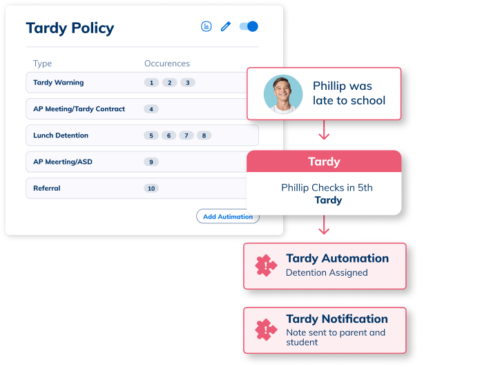
Minga gives schools a digital backbone for Positive Behavior Strategies, MTSS, and PBIS so you can stay consistent without needing a clipboard (or a photographic memory).
Here’s how.
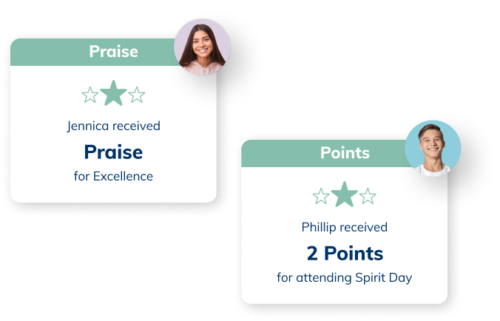
Reinforcing Positive Behaviors in Real Time
Making Data Collection & MTSS Easier (Not Heavier)
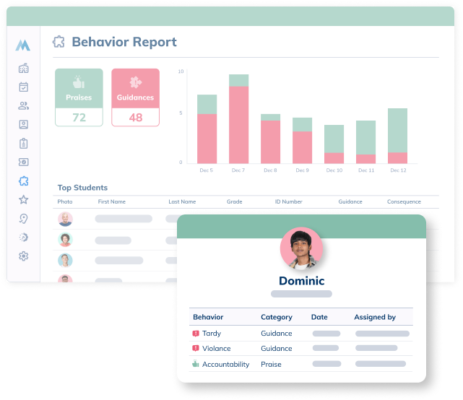
Minga’s Behavior Manager turns behavior data into actionable insights that support both proactive and targeted interventions.
- Real-Time Data Collection: Automatically track student behaviors as staff interact with students, making it easy to spot trends and patterns without extra paperwork.
- MTSS Trends: Identify patterns by student, class, time of day, or behavior type, helping you evaluate where Tier 1 strategies are effective and where adjustments are needed. Minga’s data helps identify students who need additional support, enabling you to proactively address their needs.
- Targeted Interventions: Once students who need extra support are identified, Minga’s FlexTime Manager helps schedule targeted interventions, ensuring that students receive the right support at the right time.
Structured Routines and Fair Consequences, Schoolwide
Student Ownership and Leadership Opportunities
Family Collaboration in One Place
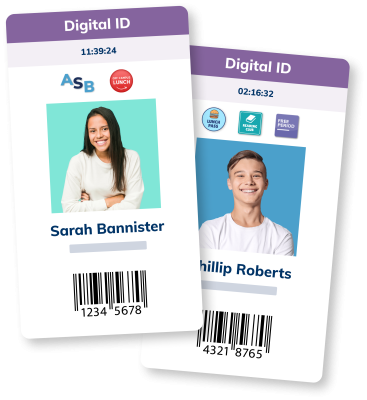
Behavior support is most effective when home and school are aligned. Minga helps create a bridge between both by keeping families informed and engaged in the process.
- Real-Time Updates: With Minga, schools can share student updates, issues, and praises with families in real time, ensuring that parents are always in the loop.
- Collaborative Conversations: Minga allows families to be part of restorative conversations or celebrations tied to schoolwide goals, enhancing the home-school partnership.

Bringing It All Together
Positive Behavior Strategies aren’t one more initiative to squeeze into an already packed school year—they’re the foundation that makes everything else more manageable.
When you combine:
- Clear expectations and routines
- Proactive, relationship-based strategies
- Fair, consistent follow-through
- A digital system like Minga to keep everyone aligned
…you create a school where students know what’s expected, teachers feel supported, and behavior stops being the constant background noise of your day.
If you’re ready to shift from reactive to proactive, Minga is here to help. Book a demo and see how our tools can make managing behavior easier, more consistent, and scalable across your school.