
Let’s be real. Scheduling Response to Intervention (RTI) periods can feel like juggling flaming torches while riding a unicycle, especially in middle and high schools. You’re making sure every student gets the support they need, balancing teacher resources, and wrestling with systems that just don’t keep up. It can drain people fast.
Good news. It doesn’t have to stay that way. More schools are turning to smarter scheduling systems that bring structure and flexibility to the chaos. That’s where an RTI Scheduler comes in. With the right setup, scheduling becomes smoother, less stressful, and far more effective. Most importantly, it frees your team’s time and directly impacts what matters most—helping students succeed.
This post walks through the biggest challenges in RTI scheduling, how flexible schedulers can ease the load, and why it’s becoming a must-have for modern schools.
A Holistic Approach to Student Support
RTI is rooted in getting students the academic help they need, but student support doesn’t start and end there. When looking at the whole student, the same scheduling challenges show up across:
- Academic interventions
- Behavioral supports
- Social-emotional learning (SEL)
Schools juggle schedules, track progress, and try to deliver timely support across all three areas. A flexible scheduler should bring these supports into one place. That way, whether your team is running an algebra intervention block, a behavior check-in, or an SEL group, you’re using the same process and the same playbook.
The Challenges of RTI Scheduling
RTI scheduling is more than dropping students into an “extra help” block. From matching students with the right supports to keeping up with data and attendance, the work adds up quickly.
Here’s where it often breaks down.
Challenge 1: Data Collection
Teachers assess student progress in different ways. Some focus on academic scores, others on behavior trends or anecdotal notes. Without consistent, accessible data, it’s tough to:
- Spot who needs help
- Prioritize interventions
- Move quickly when something changes
The result feels like trying to finish a puzzle with missing pieces, which leaves teams guessing instead of acting with clarity and confidence.
Challenge 2: Logistics & Scheduling
Now layer in logistics. You’re trying to:
- Match students with the right support
- Track who is supposed to be where and when
- Balance teacher schedules and workloads
- Ensure room availability
- Keep class sizes manageable
Not to mention, students’ needs can shift from week to week. So a fixed schedule set once a semester falls behind what students actually need in real-time. In that kind of setup, students often land in the groups that have space, not the ones that match their needs.
On top of that, you still need to ensure the students are actually showing up! If you’re doing this with spreadsheets, email threads, or pen and paper, the stress is built in.
Challenge 3: Engagement & Buy-In
RTI falls apart when the people involved are out of sync. Teachers, administrators, and families all need clear communication so students don’t slip through the cracks
Students need a voice, too. Giving them some choice in how they spend their flex or RTI time boosts engagement, but it has to be balanced with strategic placement for those who need targeted support. Striking that balance can feel tricky without a clear system.
How an RTI Scheduler Addresses These Challenges
Once a strong RTI Scheduler is in place, the chaos starts to settle. Scheduling, tracking, and communication turn into repeatable processes instead of one-off heroics.
Here’s how a platform like Minga’s FlexTime helps tackle each challenge.
Teacher Resources & Workload Management
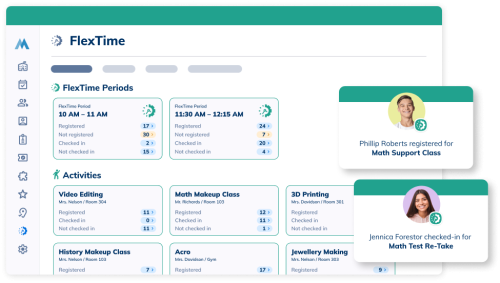
FlexTime helps schools manage interventions, enrichments, and support sessions without overloading staff.
- Teachers assign students to flexible periods using templates and filters for grade, group, or need.
- No more manual spreadsheets or long email chains to fill sessions.
- RTI time and flex period attendance is logged automatically.
- Session caps and registration cut-offs keep groups at workable sizes.
FlexTime is simple for teachers to use day to day, which means they stick with it, and the data you lean on stays consistent.
Multiple staff roles can create and lead sessions, so support doesn’t rest on the shoulders of a few people. Built-in reporting shows who is participating, where seats are open, and where demand is growing. That leads to fewer admin headaches, clearer staffing decisions, and more energy for instruction.
Streamlining Data & Intervention Management
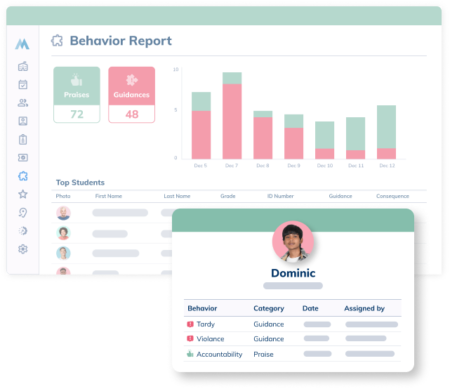
Manual data tracking eats up valuable time. FlexTime helps streamline that work by connecting intervention scheduling with everyday behavior and attendance workflows.
- Log behaviors, tardies, and guidances in seconds with Minga’s behaviour tracking.
- Use automated workflows and preset escalation paths for common interventions.
- Route students into support sessions based on consistent, trackable data.
- Teachers spend less time chasing records and more time acting on them. Students get placed into the right support sessions faster, with a clearer trail of what led them there.
(Note: FlexTime doesn’t access grade data. Schools still keep academic data in their core systems while using FlexTime to schedule and track the support blocks that follow.)
Smoother Scheduling Logistics
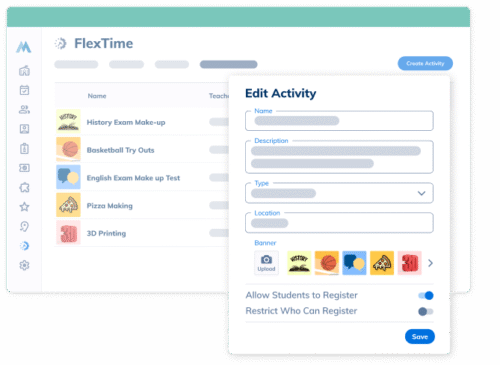
With FlexTime, schedules don’t feel locked in stone.
- Adjust offerings in real time as student needs or staffing change.
- Open and close sessions, move students, and update capacities without starting from scratch.
- Track attendance automatically so staff know who actually made it to their support block.
Over time, participation and attendance trends give leaders a clear picture of which supports reach students and where follow-up or extra outreach might help.
Students land in the right place at the right time, and staff energy goes into the quality of support rather than shuffling rosters.

“Before Minga, it was the Wild West. Now teachers know who’s coming, and we can hold everyone accountable.”
Jared Schweitzer – Assistant Principal, Centennial High, CA
Boosting Engagement & Buy-In
RTI works best when everyone pulls in the same direction. FlexTime supports that by:
- Sending real-time updates and notifications to students, parents, and teachers.
- Giving teachers clarity on who is coming to their sessions and why.
- Keeping school leaders informed with RTI participation and trend data.
Students can see and manage their flex choices within the guardrails you set, so they feel some ownership without losing structure. Families stay in the loop more easily, and staff see RTI as a shared schoolwide effort rather than one more isolated initiative.

Getting Started with an RTI Scheduler
Ready to ditch the chaos and take your RTI scheduling to the next level? Here’s how to get started with FlexTime:
1. Implementation Process
Starting with FlexTime is fast and easy. In just a few weeks, your school can be up and running with a dedicated Customer Success Manager by your side. You’ll have a customized launch plan and all the support you need to hit the ground running.
2. Integration with Existing Systems
Worried about the tech? No need to be! FlexTime integrates smoothly with your existing Student Information System (SIS), so there’s no disruption to your current processes. Automated rostering and seamless syncing ensure that everything works together without a headache.
3. Ongoing Support
FlexTime isn’t just a one-time fix—it’s a long-term solution. With live training sessions for admins, teachers, and even students, you’ll have the resources you need to ensure sustained success. Plus, ongoing support from Minga’s customer team means you’ll never be left in the lurch.
The Future of RTI Scheduling
RTI scheduling is shifting away from manual lists, whiteboards, and brittle spreadsheets. Schools are moving toward unified, flexible systems that:
- Bring academic, behavioral, and SEL supports together to support the whole student
- Make data collection and routing far less painful
- Help students receive the right support at the right time
- Give staff a clear view of who needs help, who is getting it, and what’s changing
With Minga’s FlexTime, your RTI blocks, intervention periods, and enrichment sessions all run through one consistent process. As you move beyond manual systems, RTI becomes less about paperwork and more about time spent supporting students.
Want to see what this looks like in practice? Book a short demo with the Minga team and see how FlexTime can simplify RTI scheduling at your school.