MTSS gets tossed around in meetings like everyone’s on the same page, and then you sit down to actually run it and realize the “how” is where things get messy. If you’ve ever wondered, “Is MTSS just RTI with a new label?” or “Why do our supports feel scattered even when we have good people doing good work?” you’re in the right place.
In this post, we’re going past the buzzwords and into what MTSS really is: a proactive, team-based way to support the whole student, including academics, behavior, and social-emotional needs, before small gaps turn into bigger ones. We’ll break down the tiers, clear up the MTSS vs. RTI vs. PBIS confusion, and call out the common snags that trip up real schools, like scheduling, data silos, Tier 1 wobble, and the “we’re doing everything but it still feels chaotic” problem.
Then we’ll zoom in on the day-to-day side: what it looks like when MTSS is running smoothly, and how tools like Minga can help teams keep supports organized by tracking behavior, attendance, hallway movement, and flexible intervention time. The goal is simple: less energy spent chasing logistics, and more energy spent showing up for kids.
Table of Contents:
What is MTSS in Education?
Key Components of MTSS
Why Was MTSS Created? A Holistic Approach
MTSS Pyramid and Diamond Frameworks
MTSS Tiers: The Structure of MTSS
Common MTSS Challenges and How to Avoid Them
Benefits of MTSS
How Minga Strengthens MTSS in Everyday Practice
Building a Strong Foundation for Success with MTSS
What is MTSS in Education?
MTSS is much more than just a buzzword. It’s a proactive framework designed to support every aspect of a student’s development before they fall behind. Instead of waiting for students to face significant academic or behavioral struggles, MTSS identifies needs early, ensuring students receive the right level of support at the right time. The goal? To prevent issues from escalating and create a responsive and inclusive learning environment where all students have access to the help they need to succeed.
At its core, MTSS is preventative and data-driven, encouraging collaboration across all stakeholders: teachers, counselors, administrators, families, and students. By addressing academic, behavioral, and social-emotional needs simultaneously, MTSS provides a whole-child approach to education, ensuring no aspect of a student’s well-being is overlooked.
Key Components of MTSS
For MTSS to work effectively, a few key components must be in place:
- Proactive & Preventative: MTSS helps identify and address challenges early, preventing students from falling behind or encountering more significant roadblocks.
- Whole-Child Approach: MTSS isn’t just about academic support. It encompasses behavioral and social-emotional support to address the full spectrum of student needs.
- Data-Driven Decision Making: Educators use real-time data to identify student needs, monitor progress, and adjust interventions as necessary, ensuring they are aligned with each student’s unique needs.
- Collaboration Across Teams: Teachers, counselors, families, and administrators work together to create individualized support plans, ensuring the support provided is well-rounded and effective.
- Progress Monitoring: Regular checks on student progress help educators assess whether interventions are working and allow for adjustments to be made quickly if needed
- Cultural Responsiveness: MTSS strategies should be inclusive and adaptive, ensuring that each student’s background, experiences, and needs are considered when designing support plans.
Why MTSS Was Created: A Holistic Approach
MTSS was created to bridge the gap in how we support students. Traditionally, schools operated in a reactive model, addressing student needs only after they had fallen behind. MTSS was designed to be proactive and preventative, ensuring that no student ever reaches the point of crisis. It emerged from combining two key frameworks: RTI (academic support) and PBIS (behavioral support). The goal is simple: to provide comprehensive support for all students to thrive academically and socially.
Frameworks: MTSS, RTI, and PBIS
MTSS, RTI, and PBIS are frequently discussed together, but they each have important distinctions. Understanding these distinctions is crucial to implementing each framework effectively.
- RTI focuses primarily on academic interventions for students struggling with learning.
- PBIS concentrates on behavioral support, aiming to create a positive school culture through clear expectations and reinforcement systems.
- MTSS is an integrated, holistic framework that combines academic, behavioral, and social-emotional supports to ensure all students receive the necessary support.
MTSS vs. RTI
While RTI (Response to Intervention) is often confused with MTSS, it is actually just one component of the broader MTSS framework, specifically targeting academic support. MTSS goes beyond RTI by providing comprehensive, tiered support across three domains: academics, behavior, and social-emotional learning (SEL).
Here’s how they differ:

In short, RTI fits inside MTSS, not the other way around. MTSS ensures that schools create environments that meet every student’s whole-child needs—before learning or behavior gaps widen.
MTSS vs. PBIS
PBIS (Positive Behavioral Interventions and Supports) is another framework often mentioned alongside MTSS. While RTI focuses primarily on academics, PBIS focuses on behavior—helping schools build positive, predictable environments that support student engagement and growth.
MTSS uses PBIS principles as part of a broader effort to address behavior, academic performance, and social-emotional well-being together.
Think of it this way:
- PBIS establishes the culture, expectations, and reinforcement systems that make positive behavior the norm.
- MTSS leverages that culture while aligning academic instruction and SEL development within the same tiered structure.
In practice, this means schools implementing MTSS are already using PBIS principles—just not in isolation. PBIS provides the behavioral foundation for MTSS, ensuring that schools respond to student needs with consistency, empathy, and equity across all tiers.
MTSS Pyramid and Diamond Frameworks
MTSS Pyramid/Triangle Framework
The traditional MTSS framework is often represented as a three-tier pyramid, but there are other models that districts may use depending on their needs and priorities. For instance, some districts may opt for an “inverted pyramid” to emphasize the importance of Tier 1 universal supports. This model conveys that Tier 1 is the foundation of all supports, while Tier 2 and Tier 3 build upon this with more targeted or intensive interventions.

MTSS Diamond Framework
Another model, the diamond framework, integrates academic, behavioral, and social-emotional learning (SEL) needs but adds a strengths-based element. This framework ensures that even students requiring enrichment or advanced learning opportunities are supported alongside those needing additional interventions.
MTSS Tiers: The Structure of MTSS
At the heart of MTSS is a tiered system that ensures support is matched to students’ needs at every level. The three-tiered model is designed to provide a range of support from universal to intensive.
Let’s take a closer look at how these tiers function:
Tier 1: Universal Supports
Tier 1 supports all students in the classroom, providing high-quality, core instruction designed to meet the needs of the majority of students (around 80-90%). The focus at this level is on preventative measures, high-quality teaching, and creating an inclusive school culture where all students can thrive.
Key Features of Tier 1:
- Differentiated Instruction: Tailored teaching methods that meet students at their current level of understanding.
- Classroom Management: Clear behavioral expectations and positive reinforcement systems to promote a positive learning environment.
- Universal Screenings: Used to identify students who may need additional support.
Strong Tier 1 practices ensure that most students don’t need additional interventions. If gaps in learning or behavior are detected, interventions can be introduced in Tier 2.
Tier 2: Targeted Supports
Tier 2 provides additional support to students who need more than Tier 1 offers. These students typically make up about 10-15% of the student population. Interventions in Tier 2 are more targeted, usually involving small-group instruction or more frequent progress monitoring.
Key Features of Tier 2:
- Small Group Instruction: Targeted learning sessions addressing specific gaps in students’ knowledge or skills.
- Behavioral Interventions: Includes social skills training, mentoring, or check-in/check-out systems for students struggling with behavior.
- Progress Monitoring: More frequent data collection to track student progress and adjust interventions as needed.
Tier 2 interventions are designed to help students catch up and succeed alongside their peers. If they continue to struggle, they may require more intensive support, moving them to Tier 3.
Tier 3: Intensive Supports
Tier 3 is reserved for students who need individualized support. This tier addresses the smallest percentage of students (about 1-5%) and offers the most intensive and personalized interventions.
Key Features of Tier 3:
- One-on-One Support: Intensive, individualized instruction or behavioral therapy.
- Frequent, Detailed Progress Monitoring: To track effectiveness and adjust interventions swiftly.
- Specialized Services: These may include counseling, special education services, or other community resources.
Tier 3 interventions help students facing significant academic or behavioral challenges, with the goal of helping them progress toward grade-level proficiency.
Common MTSS Challenges and How to Avoid Them
MTSS is a powerful framework, but it can become fragile when the structures supporting it are inconsistent or underdeveloped. Many challenges aren’t the result of unwilling educators—they come from predictable gaps in time, tools, communication, and systems. Understanding these pitfalls helps schools build MTSS in a way that is sustainable and genuinely responsive to student needs.
1. Scheduling Interventions
Coordinating interventions is one of the most complex operational challenges in MTSS. Students require different supports at different times, yet staffing, room assignments, and instructional minutes are fixed. When teams rely on static schedules or manual tools like spreadsheets, the system quickly falls out of sync with actual student needs. Students miss interventions, show up in the wrong place, or cycle through supports that are no longer relevant.
The Solution: Adopt dynamic scheduling processes or a flexible scheduler that adjusts in real time and clearly communicates where students need to be. This ensures interventions stay aligned with changing needs and reduces the burden on staff.
2. Inconsistent Use of Data
MTSS relies on frequent, accurate, and accessible data—but in many schools, data lives in silos, is updated inconsistently, or is difficult for teams to interpret. Without a clear picture of student progress, decision-making becomes reactive and fragmented. Educators may continue interventions that aren’t effective or fail to recognize patterns early enough to intervene.
The Solution: Centralize data collection and make it accessible and easy to interpret. Regular data reviews help ensure MTSS interventions remain aligned with actual student progress.
3. Over-Reliance on Tier 2 and Tier 3 Supports
When Tier 1 practices aren’t strong or consistent, students naturally flow upward into more intensive tiers—even when their needs could have been met through high-quality instruction and classroom supports. This strains resources and creates the impression of a “high-need” population when the real issue is foundational.
The Solution: Strengthen Tier 1 first. Ensure universal instruction, expectations, and supports are consistent and inclusive, so higher tiers are reserved for students who truly require them.
4. Lack of Collaboration
MTSS requires a shared understanding of student needs, yet many teams operate in silos—teachers collecting their own notes, counselors making plans others never see, and administrators analyzing isolated metrics. This leads to disjointed interventions and students receiving mixed messages or duplicated support.
The Solution: Create predictable structures for collaboration—regular meetings, shared documentation, and transparent communication—so all adults work from a unified plan.
5. Insufficient Family Engagement
Families provide insight into a student’s experiences and are essential partners in reinforcing strategies outside the classroom. When families are only contacted after problems arise, or when interventions are not communicated clearly, consistency breaks down and progress slows.
The Solution: Build proactive, ongoing communication with families. Keep them informed about goals, strategies, and progress so they feel included and can support their child effectively.
6. Lack of Flexibility in Interventions
Students evolve, but intervention plans don’t always evolve with them. When interventions are treated as fixed programs rather than adaptive supports, students can spend weeks in a system that doesn’t match their current needs.
The Solution: Use progress monitoring intentionally and be willing to pivot interventions when growth plateaus. MTSS should be fluid, not static.
7. Inadequate Staff Training
MTSS assumes shared skills in data analysis, progress monitoring, differentiated instruction, and behavior supports—but not all educators have equal training in these areas. When staff feel uncertain, implementation becomes inconsistent and MTSS appears unpredictable or overly complex.
The Solution: Provide ongoing, targeted training that supports real classroom practice. When educators feel confident using MTSS tools and strategies, systemwide consistency follows.
8. Failure to Adjust
Even well-designed interventions can become ineffective if teams don’t regularly evaluate outcomes. When interventions continue simply because they exist—or because changing them feels overwhelming—students lose valuable time and momentum.
The Solution: Build routines for reviewing intervention effectiveness and empower teams to make timely adjustments. Continuous improvement should be part of the school culture.
Benefits of MTSS
When implemented well, MTSS transforms both student outcomes and school culture. Here’s how:
- Early and Equitable Support: MTSS replaces the outdated “wait-to-fail” model by spotting challenges early and providing timely, equitable support.
- Whole-Child Success: By integrating academics, behavior, and SEL, MTSS supports the whole student, leading to higher academic achievement, fewer behavioral incidents, and stronger social-emotional health.
- Stronger School Climate: Consistent expectations and positive reinforcement help build a school culture where students feel safe, respected, and motivated.
- Data-Driven Improvement: MTSS uses data to make informed decisions, ensuring interventions are effective.
- Increased Collaboration and Efficiency: MTSS breaks down barriers, fostering alignment and cooperation among educators, families, and administrators.
- Reduced Disproportionality: MTSS ensures equity by identifying patterns of bias and taking action to correct them.
- Sustainable Systems and Long-Term Gains: Over time, MTSS strengthens instructional quality, supports staff retention, and creates long-term stability.
How Minga Strengthens MTSS in Everyday Practice
Think of Minga as your MTSS sidekick—always in the background, making sure everything runs smoothly so you can focus on what really matters: supporting your students. Whether you’re tackling Tier 1, 2, or 3, Minga helps bring it all together in a way that makes sense, giving you the tools you need to keep things organized, efficient, and effective.
MTSS is great, but without a way to track progress and stay on top of who needs what support, things can easily fall apart. Minga gives you that extra boost, bringing together behavior, attendance, hallway movement, and flexible intervention scheduling so you’re always ready to step in when needed.
Building a Strong MTSS Tier 1 Foundation
Tier 1 is all about creating a solid foundation for every student—and Minga’s got your back. From tracking positive behaviors to making sure students are where they need to be, these tools help keep things running smoothly.
- Hallway Management: Let’s face it, hallway traffic can be chaotic. With a Digital Hall Pass, you set clear rules for passes, track when and where students are moving around, and get the data you need to spot any trouble spots. You can track everything—from pass types to who’s using them—so you can see exactly what’s going on. Less chaos, more clarity
- Tardy & Truancy Management: Tardy students? We’ve all been there. With a Tardy Management System, you can automatically assign consequences when students are late, helping keep everything consistent. Set your tardy policies (e.g., “First warning, third tardy = detention”) and let Minga do the heavy lifting, so you don’t have to worry about tracking it all yourself
- Positive Behavior & Engagement: Celebrate those little wins! With Minga’s Behavior Tracking and PBIS Rewards tools, you can reward students for positive actions and track their progress over time. Whether it’s handing out Praise or Guidance points, you’ll have the data you need to recognize the students who are shining and adjust practices based on the real-time data. After all, it’s the small victories that keep Tier 1 healthy.
- Negative Behavior & Consequences: We all need a little redirection from time to time. Minga’s MTSS intervention and behavior tools help you stay on top of that by automating consequences based on your school’s progressive discipline framework. Whether it’s warnings or detentions, you can ensure consistency without the headache and stay on top of overdue actions to keep things moving forward.
- Flexible Enrichment & Access to Supports: FlexTime is like the secret sauce for Tier 1. Whether it’s enrichment or extra support, FlexTime makes sure students get access to the opportunities they need. Plus, with new updates to help with tracking attendance and better filtering for registration, Minga keeps it all running without a hitch.
These tools help schools understand who’s on track, who’s getting recognized, and where systems might need a little extra attention. It’s about making sure Tier 1 is running smoothly and everyone is getting the support they need.

Powering Tier 2 & Tier 3 Intervention Systems
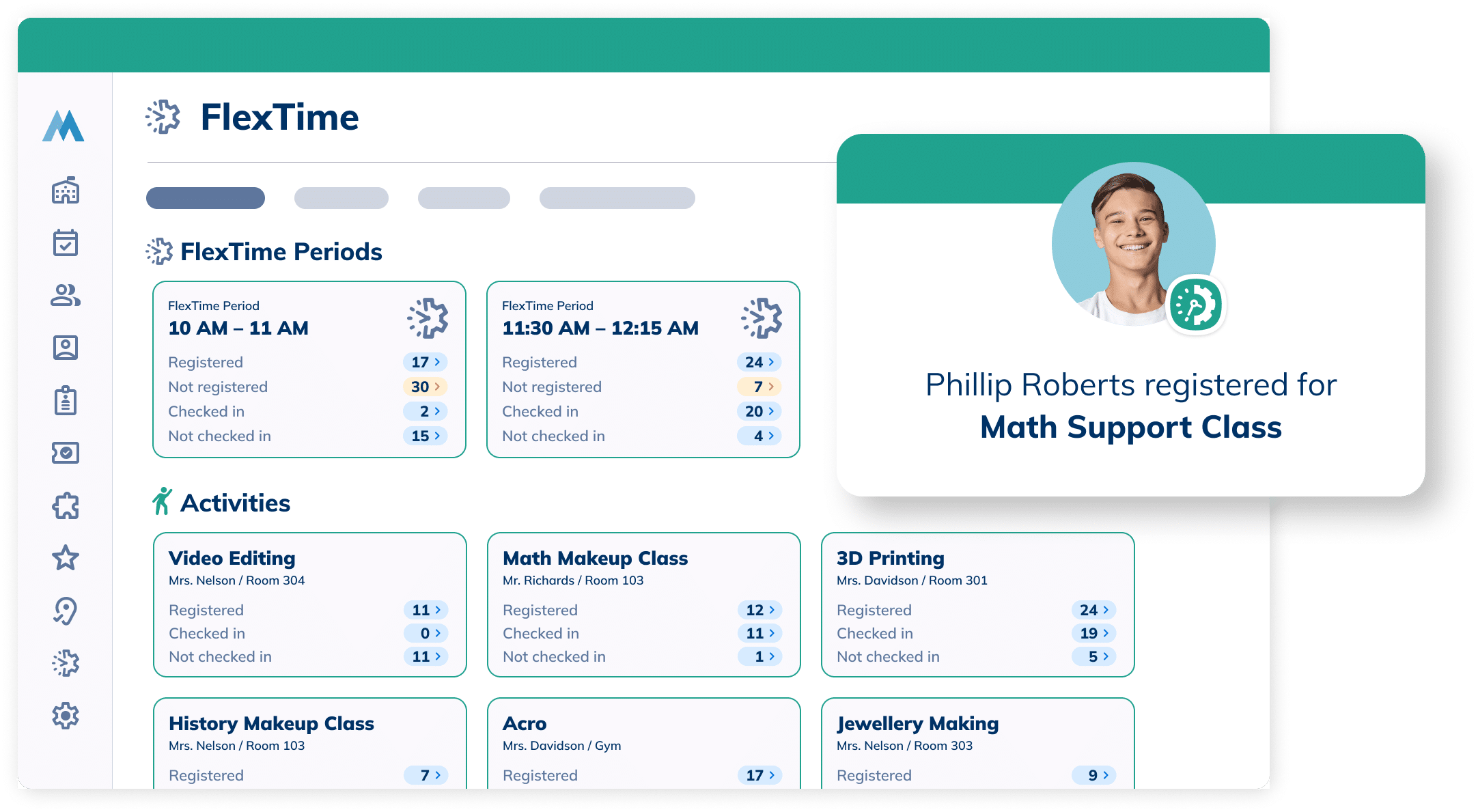
A Connected Piece of the MTSS Ecosystem
Minga isn’t here to replace your existing systems—it’s here to make them work better together. It connects all the pieces of your MTSS puzzle: consistent expectations, reliable data, and easy access to the supports your students need.
By streamlining everything from hallway management to tardy tracking, positive behavior systems, and flexible interventions, Minga saves you time and gives you the data
Building a Strong Foundation for Success with MTSS
MTSS isn’t just another thing on your already full plate. It’s a way to pull together all the support you’re already trying to give students into one clear system that makes sense. When we use MTSS to connect academics, behavior, and social-emotional learning, we’re really saying no student should have to struggle alone. It’s about noticing needs earlier, responding with intention, and making sure every learner has a team of adults in their corner.
Putting MTSS into practice can feel big, but it doesn’t have to happen all at once. You can start by strengthening Tier 1, building simple data routines, and making regular time for teams to talk about students. Tools like Minga can make this much easier by helping you track, schedule, and respond in real time instead of living in spreadsheets.
Interested in learning how Minga can help improve your MTSS efforts? Schedule a demo to explore how our platform can support your school and help ensure every student is supported effectively.