Student engagement is one of those phrases we all “get”… until we’re living it on a Tuesday at 9:13 a.m.
One student is locked in. One is physically present but mentally elsewhere. Two are late (again). A handful are drifting the hallways. And somehow, the same school that can run standardized testing like a NASA launch still struggles to get consistent participation in daily learning and school life.
If that sounds familiar, you’re not alone. According to the Institute of Education Sciences, about one-quarter of U.S. public schools reported that lack of focus or inattention had a “severe negative impact” on staff morale and student learning in 2023/24.
Here’s the good news: engagement is not a fixed trait. It’s influenced by context — and context is something schools can shape.
What Is Student Engagement?
Most definitions of student engagement focus on how students participate in school learning: their attention, effort, and emotional investment. These definitions often break engagement into three dimensions: behavioral, cognitive, and emotional.
However, to truly understand student engagement, we must consider where to look for it.
Student Engagement Has Two Arenas
The clearest way to spot engagement is to look in two places: how students engage in learning and how they engage in school life. It includes what students do academically, and also how connected they feel to the school community through relationships, activities, and a sense of belonging.
Learning Engagement (classroom-centered): Participating, contributing, persisting through challenges, helping others, etc.

School-life Engagement (campus-centered): Belonging, involvement, attendance patterns, positive choices, participation in activities, etc.

Why is this distinction important? Because engagement indicators don’t just show up in the classroom. They also appear in hallways, attendance, flex periods, event participation, and behavior patterns. These aspects of school life shape the environment in which learning happens.
And this is exactly why “just adding more classroom strategies” often falls flat. Without addressing engagement across the entire school experience, we miss the broader picture of how students connect to the school community as a whole.
Engagement in the Classroom & Beyond
Let’s explore the three key dimensions of student engagement and how they play out both inside and outside of the classroom.
Behavioral Engagement
Behavioral engagement is what students do: effort, participation, and follow-through. In the classroom, it shows up in attention and routines. Across campus, it shows up in movement and choices throughout the day. Are students consistently participating and staying on task in class? Are they arriving on time and staying where they are supposed to be between learning spaces?
Classroom Indicators: Participation, attention, staying on-task, routines, etc.
Campus Indicators: Tardiness, roaming, event participation, flex-period engagement, etc.
Cognitive Engagement
Cognitive engagement is how students approach learning: persistence, ownership, and willingness to take on challenges. In the classroom, it shows up in deeper thinking and sticking with difficult work. Across campus, it shows up in whether students choose opportunities that extend learning and follow through on support. Are students pushing through challenges and taking ownership of learning in class? Are they opting into enrichment or tutoring when they need it and sticking with intervention plans?
Classroom Indicators: Persistence, deeper thinking, problem-solving, willingness to revise, etc.
Campus Indicators: Enrichment participation, tutoring attendance, intervention follow-through, support seeking, etc.
Emotional Engagement
Emotional engagement is how students feel about school: belonging, connection, and motivation. In the classroom, it shows up as interest and willingness to try. Across campus, it shows up in involvement, relationships, and student voice. Do students feel safe enough to participate and try in class? Do they feel connected enough to show up in the broader school community through clubs, events, and student voice opportunities?
Classroom Indicators: Interest, belonging, optimism, willingness to try new things, etc.
Campus Indicators: Joining clubs, attending spirit events, contributing to student voice initiatives, building relationships with peers and staff, etc.

Why Student Engagement Is Slipping Right Now
Engagement challenges are often talked about as student motivation problems. But many are actually environmental problems — and they show up as patterns across the day.
Here are the “engagement breakers” we see most often:
- Attention Is Harder to Earn (and Harder to Keep): Many schools report inattention as a serious problem impacting morale. When attention is fragile, engagement requires tighter routines, clearer expectations, and fewer disruptions.
- Belonging Is Uneven: Students engage more when they feel known, included, and valued. Not just academically, but socially. When belonging slips, participation often becomes “only for the confident kids.”
- Lack of Participation Recognition: If participation isn’t noticed or reinforced consistently, students don’t build the habit. Inconsistent recognition also undermines perceived fairness.
- School Operations Quietly Sabotage Learning Time: When hallways turn into hotspots for meetups, vaping, valentines, or roaming, learning takes the hit.
- Engagement Data Exists, But It’s Scattered and Late: Many schools only realize a student is disengaging after grades drop, behaviors escalate, or attendance issues become chronic. By then, the work is harder.
The Real Issue: Engagement Is a System, Not a Single Strategy
Most schools don’t lack engagement ideas. They lack engagement infrastructure — a consistent way to:
- Invite participation,
- Reduce friction to participate,
- Recognize it when it happens,
- Spot disengagement early,
- And follow through consistently.
Think of it like an engagement flywheel:
Invite → Participate → Recognize → Monitor → Support → (repeat)
When this loop runs smoothly, engagement grows. When it’s fragmented, engagement becomes dependent on individual teachers, individual classrooms, and sheer staff heroics. And heroics don’t scale.
The next step is measuring the signals in that loop across the day, so schools can spot drift early and respond consistently.
How to Measure Student Engagement
Engagement data is most useful when it is timely, connected, and actionable. It loses value when it is scattered across spreadsheets or only shows up after a student is already failing. The strongest measurement points are the ones schools can see across the day: who is present, who is in learning, who is participating, who feels connected, and who needs support.
1. Attendance and On-Time Arrival
Start with the foundational signals: attendance, absences, chronic patterns, and tardies. These trends show up early and often. When a student is repeatedly absent or late, they are missing more than minutes. They are missing momentum, connection, and predictable routines that help engagement stay steady.
2. Time-in-Learning
One of the clearest engagement indicators is time-in-learning. It includes the cumulative impact of arrivals, transitions, time out of class, and instructional minutes across the day. Watch for frequent time out of class, hallway movement or roaming, extended breaks, missed check-ins, and patterns of frequent in-and-out of class. These are not only operational issues. They are engagement signals that often predict academic slide, behavior escalation, and staff fatigue from constantly resetting classrooms.
3. Participation and Contribution
Participation is more than raising a hand. Look for contributions, check-ins, discussion involvement, collaboration, and student involvement in activities. You can also measure participation through student voice interactions such as quick polls, challenges, and feedback moments. Students who feel heard and included are more likely to engage consistently.
4. Behavior Patterns
Behavior is one of the fastest feedback loops for engagement. Track minor disruptions, repeated redirections, and referral or infraction trends, especially patterns tied to certain times, settings, or transitions. Often, what looks like “behavior” is a signal that expectations are unclear, students feel disconnected, or learning time has already been disrupted.
5. Belonging and Student Voice
Engagement is emotional as much as it is behavioral. Look at club and event participation, repeated involvement over time, and student voice inputs like surveys, polls, and feedback. Pair this with relationship and climate signals, including whether students report feeling known, included, and safe. Belonging is often the difference between students who opt in and students who opt out quietly.
6. Support Follow-Through
Finally, measure engagement through support participation. Track tutoring, intervention, enrichment, and follow-through over time. Students who consistently attend support opportunities are demonstrating ownership and persistence. Avoidance, inconsistent attendance, or repeated no-shows can be early signals of overwhelm, low confidence, or disconnection. This is also where timely intervention makes the biggest difference.
How to Increase Student Engagement with Minga
With a clear understanding of how to measure engagement, it becomes easier to identify where support is needed and take actionable steps to boost engagement. Minga brings time-in-learning, behavior, participation, belonging, and support signals into one connected view, so teams can respond faster and more consistently. It helps schools not only track engagement but also improve it across multiple dimensions.
Time-in-Learning Monitoring
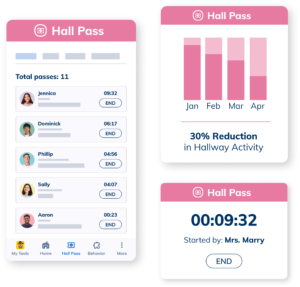
Minga tracks tardies, absences, and time spent outside the classroom through its Tardy Management and Digital Hall Pass solutions, providing real-time insights into student attendance and time-on-task. By identifying disengagement patterns early, whether through frequent tardiness, absences, or excessive time out of class, Minga enables proactive intervention. This helps schools address issues of disengagement before they impact academic performance, ensuring that students stay on track with their education.
Real-Time Behavior Management
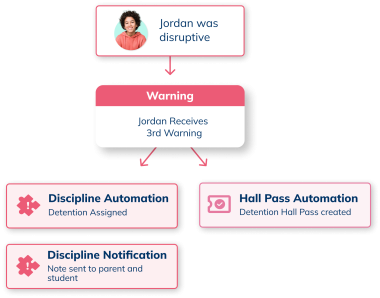
Keep students accountable in real time with Minga’s Behavior Manager, addressing behaviors immediately and providing instant feedback. By tracking student actions as they happen, teachers can quickly intervene, ensuring a more focused and engaged classroom environment. Streamline discipline through automated workflows and pre-set escalation steps, followed by notifications to students, teachers, admins, and families. This immediacy and automation help prevent small issues from escalating, maintaining a positive learning space where students stay on track and engaged, while minimizing disruptions for the rest of the class.
Motivating Rewards System
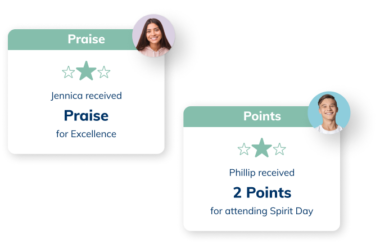
Reinforce positive behavior with an engaging rewards program that encourages students to stay involved and motivated. By awarding praises, points, or incentives for desirable behaviors, students are motivated to participate actively in school activities. The rewards system provides students with tangible recognition of their efforts, creating a cycle of positive reinforcement that boosts engagement and morale.
Flexible Enrichment & Personalized Learning:
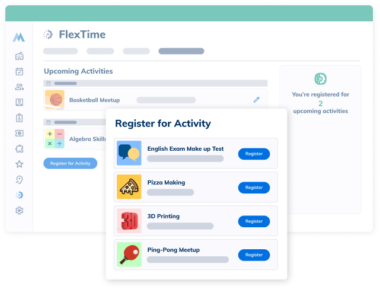
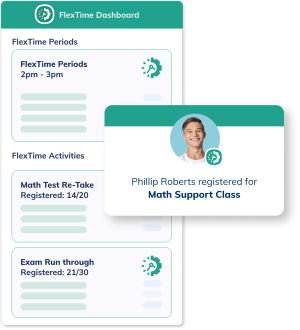
Minga FlexTime makes flex periods purposeful by combining student voice and choice with clear adult controls. Students can browse options, see real-time availability, and register for activities that match their interests, unless they are already assigned. Staff can set smart boundaries, track who is registered, and ensure full coverage with automatic routing for students who do not choose. The result is less wandering, stronger participation in enrichment and support, and a smoother system that keeps learning on track.
Tailored Interventions & Support Program Tracking
Minga’s flexible scheduling also enables personalized interventions for each student, whether academic, behavioral, or social-emotional. By offering tailored support based on individual needs, Minga ensures that students receive the right help at the right time. Additionally, Minga tracks participation in tutoring, enrichment, and intervention programs, ensuring students who need extra support are actively engaging with available resources. This integrated approach helps students feel more supported and engaged, ultimately fostering a stronger connection to their educational journey.
Streamlined Communication
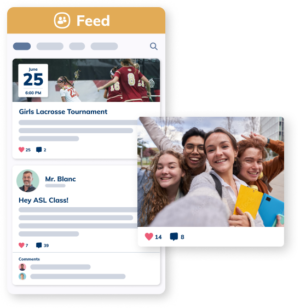
Stay connected with parents, guardians, teachers, and students, fostering a collaborative approach to engagement. Minga centralizes all school communications, allowing teachers to message students directly, send mass announcements, and manage events from one platform. Parents receive real-time updates on their child’s activities, behavior, and progress, ensuring they’re always in the loop. Student voice is heard through polls, challenges, comments, and more, promoting active participation and feedback across the school community.
Building Engagement Across the School Day
Student engagement goes beyond the classroom. It includes how students interact with peers, participate in school activities, and feel connected to the community. To create lasting engagement, schools need a system that integrates behavioral, cognitive, and emotional engagement across all areas of school life.
Minga offers the tools to build this system by tracking student participation, recognizing effort consistently, and providing real-time insights to support students when they need it most. By fostering a cohesive engagement strategy across campus, Minga helps schools create an inclusive, motivating environment where every student can thrive.
Ready to strengthen student engagement across your school? Book a demo today and start building a more connected school community.
Ready to Strengthen Student Engagement Across Your School?
Book a demo today and start building a more connected school community.