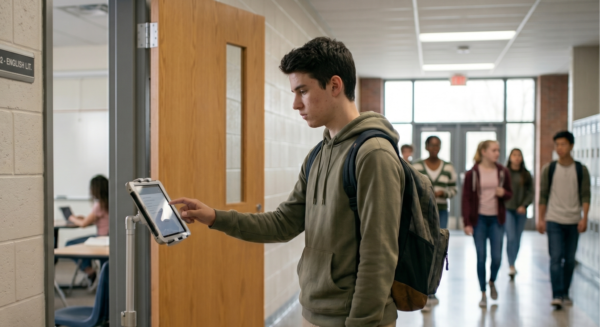
Picture this. A student needs to get to the nurse. No phone. No personal device. The teacher points to the kiosk in the hallway. The student walks up, checks in, and is on their way in under 30 seconds. Every step is logged. No paper. No guesswork.
That’s the goal. But most digital hall pass systems aren’t built for it. They’re built on the assumption that every student has a phone, and when that assumption breaks down, so does the system.
Minga handles students without phones or with limited technology access in three different ways: teacher-issued passes, Kiosk Mode, and shared classroom devices. Each path produces the same data trail. Each works the same way behind the scenes. And together, they mean no student falls through the gap.
The Question Schools Are Asking
When administrators start evaluating digital hall pass systems, one question comes up fast: Does this work regardless of whether students have phones?
It’s the right question. And it doesn’t have a simple answer, because the reality in most schools is layered. Some schools have full phone bans. Some students are in phone-free classrooms but can use devices in the hall. Some have phones but limited data. And some students simply don’t have a device at all. Not because of any policy, but because of where they live and what their family can afford.
A digital hall pass that only works when every student has a phone in their pocket isn’t really a school-wide system. It’s a workaround with a gap.
Why Flexibility Isn’t Optional
When a hall pass system only works for students with phones, it creates two tiers. Students with devices get a seamless digital experience. Everyone else gets a paper slip, a verbal exception, or nothing at all.
Most digital hall pass systems weren’t designed with students who have limited technology access in mind. That works fine until it doesn’t. A phone ban. A broken screen. A family that can’t afford a data plan. Any of those scenarios exposes the gap — and in most schools, that gap is bigger than people assume.
Equity isn’t just about big-picture policy. It’s about whether the everyday tools in your building work the same way for every student who walks through the door. A hall pass system that requires a phone to function isn’t equitable. It’s a liability.
Three Ways Minga Covers Every Student
Minga is built around three access paths, so the system works regardless of what a student has in their pocket.
1. Teacher-Issued Passes
A teacher can create and approve a hall pass on a student’s behalf. No phone required on the student’s end. The teacher handles it from their device, the same way they’d already be managing the class, and the pass is logged in real time.
This is the fastest option for students who don’t have devices at all. It keeps the process teacher-controlled without slowing anyone down.
2. Kiosk Mode
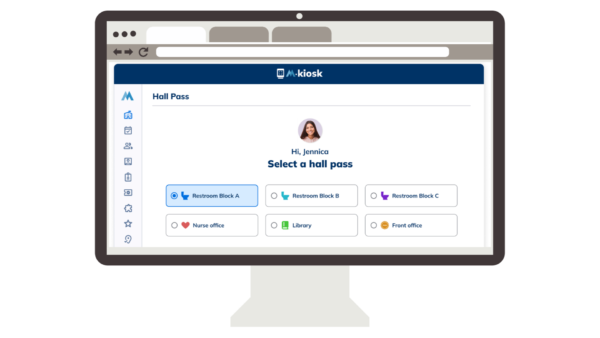
Minga’s Kiosk Mode turns any Chromebook, iPad, or web-enabled device into a self-serve station for students. Place one in the hallway, the front office, or a common area. Students walk up, scan their student ID (printed or digital), and create or check in on a pass in seconds.
It’s secure. Only authorized students can interact with the kiosk, so there’s no risk of unauthorized access. And it’s built to handle high-traffic moments: before school, between periods, during passing time, without slowing to a crawl.
Kiosk Mode also handles tardy check-ins. Instead of paper slips or front-desk bottlenecks, students who arrive late check in at the kiosk and the system logs it automatically. Real-time data. No manual entry. No disruption to the front office.
3. Shared Classroom Devices
In classrooms with shared computers or tablets, students can create their own pass from a class device. They don’t need a personal phone. They just need a few seconds and access to the Minga platform.
What Gets Tracked, Regardless of How a Pass Is Created
No matter which access path a student uses, the pass works the same way behind the scenes.
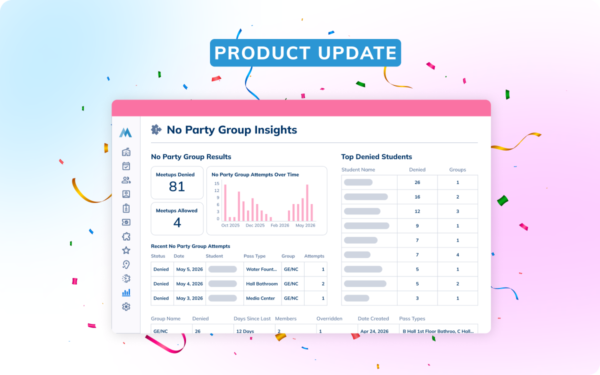
Every pass logs where the student is going, when they left, and how long they’ve been out. Administrators can see who is in the hallway in real time. Schools can set limits on the number of daily passes, block passes during high-stakes testing windows, and prevent groups of students from being out at the same time. Minga calls this No Party Groups.
The method of access doesn’t change what gets recorded. A student who creates a pass from a kiosk has the same data trail as a student who creates one from their phone. That consistency matters for schools that rely on hall pass data to understand hallway patterns, address chronic absenteeism, or support safety protocols.
Why This Matters for Schools Choosing a Platform
When your school is evaluating digital hall pass options, the question of how the system handles students without phones or with limited technology access isn’t a secondary concern. It’s a requirement.
A system that assumes every student has a phone will break down in schools with phone bans, limited 1:1 device programs, or economically diverse student populations. The workarounds: paper passes for some students, digital for others, undermine the consistency the system was supposed to create in the first place.
The right question to ask any vendor is simple: Can every student in our building use this, regardless of what they have in their pocket?
With Minga, the answer is yes.
Ready to Strengthen Student Engagement Across Your School?
Book a demo today and start building a more connected school community.