At the CADA 2026 conference, we wanted to hear what is really happening with culture and engagement in California schools today. So we brought our “Engagement Wall”, a simple, hands-on way for school leaders to tell us what their key challenges are.
The wall asked three questions:
- How well does your existing school technology foster student connection and engagement?
- What are the biggest student behavior challenges at your school?
- When it comes to planning events and engaging students, where do you see your school right now?
The goal was to give educators a visual way to display the reality of their schools. By placing stickers to show their current struggles and wins, hundreds of leaders turned a blank wall into a real-time map of school culture.
The results were a wake-up call. While the “big” crises like vaping and bullying aren’t the only things on people’s minds anymore, educators are now battling a slow erosion of culture caused by empty desks and students who are physically present but mentally elsewhere.

The Daily Battle for Student Presence and Participation
What did we learn? The CADA 2026 Behavior Report highlights a shift in school culture, moving away from reactive crisis management toward solving the fading sense of student presence and connection.
The top five behavior trends identified by California educators at the conference are:
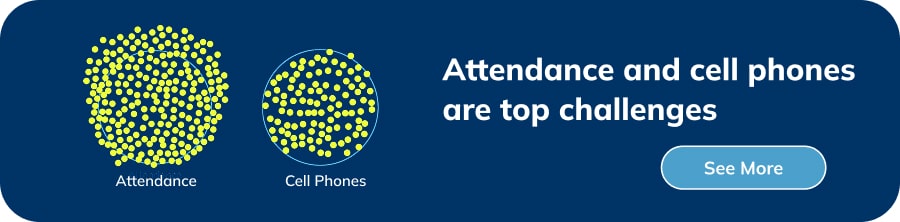
- Attendance (Physical Presence): This remains the #1 priority, with a majority of educators ranking it as their top daily struggle.
- Cell Phone Use (Mental Presence): Cell phones remain a major concern, pulling students away from the classroom, even when they are physically present.
- Hallway Loitering: Cited as a visible sign of disengagement, crowded hallways create a “visibility void” in which students drift away from class and the school community.
- Skipping Events: Educators are seeing a rise in students who are physically on campus but culturally absent. Skipping events is a telling symptom of a deeper issue: a lack of connection that keeps students from fully participating in school life.
- The “Neutral Middle” Stagnation: A significant number of schools feel stuck in a “neutral zone”. While they have a baseline for student involvement, they struggle to transition into a high-performing culture where students truly feel connected.
In contrast, previous “crisis” behaviors like vaping and cyberbullying received significantly fewer mentions, signaling that leaders are now more focused on the daily battle for student presence and participation.
The data showed a key “double battle” that is draining the energy of school leaders:
- Showing Up: Attendance remains the #1 challenge. It’s more than just a data point; it’s a constant “paper chase” that keeps staff tied to desks instead of connecting with students.
- Staying Focused: Cell phones are a “digital exit” that disconnects students from learning. However, schools are finding that when they provide a clear, unified way to manage the day, there is no need for cell phones to be in the classroom.
The “Neutral Middle” Trap
When we asked attendees to rate event attendance and student engagement, the response was clear. A massive number of educators feel their schools are stuck in “The Neutral Middle.”
These schools aren’t in total chaos, but they haven’t reached true connection either. They’ve found a baseline, but the jump to a school where every student feels they belong hasn’t happened yet.
Why is this connection to school so important? When students don’t feel seen or held accountable, they start to opt out. You see it in the students lingering in the halls and the empty seats at football games. They aren’t just ‘skipping’, they are disconnecting from daily life at school.
Moving Past Manual Work
The good news? Most leaders have a clear vision: they want to build real connections. The bad news? They are held back by stacks of paper, manual reporting, and unreliable technology.
Many schools use digital tools, but only as “filing cabinets” for storing data rather than as ways to reach students. To move out of that “stalled middle,” technology has to stop being a chore and start being the system that frees you up to mentor your kids.

What Helps to Boost School Culture?
We believe school success happens when teachers can stop acting as “the bad guys” and get back to being mentors. By bringing together the scattered pieces of your day, from the morning bell to the final period, you need clarity and calm to move your school from just getting by to truly thriving.
Whatever technology you use, it should act as the heartbeat of your school, helping you win the battle for presence by:
- Ending the “Invisible” Student: Bringing chore-like admin tasks like hall passes, tardy slips, behavior management, and event check-ins into one view so no student drifts away.
- Stopping the Paper Chase: Moving staff away from paperwork and outdated systems, so they can return to the roles they actually love.
- Building Real Belonging: Moving toward a culture where every student is seen and recognized.
Ultimately, the data from CADA reminds us that while challenges like attendance and cellphones are very real, the heart of an educator remains unchanged. They are looking for better ways to reach students to see them succeed. By removing paperwork and flawed technology, we make room for the moments that actually matter. It’s about the wave in the hallway, the high-five at the rally, and the quiet reassurance that every student has a place where they belong. There is a path out of the “neutral middle,” and it starts with reclaiming time so educators can refocus on the human connections that make a school a home.
Ready to Strengthen Student Engagement Across Your School?
Book a demo today and start building a more connected school community.