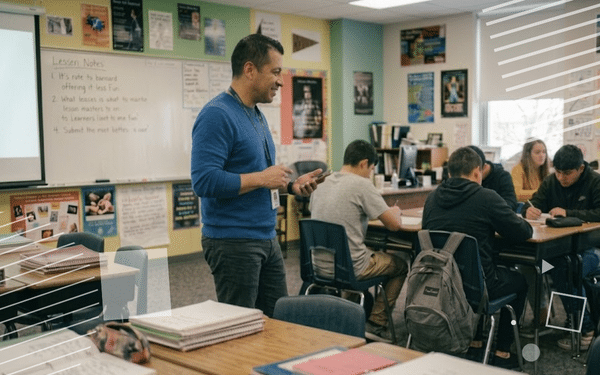
You’re mid-lesson. A student does something genuinely worth noticing: helps a classmate, stays on task through something difficult, says something that models exactly the behavior you’ve been trying to build. You notice it. And then you keep teaching, because stopping to log it means opening an app, finding the student’s name, selecting a category, and doing it while twenty-eight other kids are in the room.
By the time the lesson ends, the moment is gone. You meant to log it. You didn’t. The student has no idea you noticed.
This is the recognition gap. Most teachers notice the moment. The problem is there’s no way to act on it before the next thing starts.
The Warning Sign Most Schools Miss: When Staff Participation in Recognition Starts to Drop
Here’s something that happens in most recognition programs around month three, and almost nobody names it out loud.
Teacher participation starts strong at launch. Everyone is using the app. The points totals climb. PBIS leaders and admins see healthy numbers and assume the program is working.
Then, quietly, a handful of teachers stop logging. Then a few more. The totals stay healthy because a small number of highly engaged staff are carrying the volume. The program looks fine from the outside. The experience for most students has completely changed.
This is recognition decay. Teachers didn’t stop caring. The app got slightly harder to use, or the categories drifted, or the login added a step. Small friction compounded over weeks looks the same as a program nobody believed in.
The number worth pulling isn’t the points total. It’s how many distinct staff members awarded recognition last month compared to the month before. If that number is falling while the total holds, a small group is compensating for a much larger group that has quietly disengaged.
If your program is in month three or later, that’s the number worth checking. Not to evaluate teachers, but to understand whether the friction level is sustainable at scale.
Which Apps Allow Teachers to Award Points or Recognition in Real Time During Class?
Most apps technically allow it. The more useful question is what “real time” actually looks like from inside a classroom.
A teacher mid-lesson has about two seconds between noticing a behavior and losing the moment to the next thing. In those two seconds, the recognition has to happen or it won’t happen at all. That means the app needs to get from open to awarded in fewer taps than a teacher can count on one hand, without requiring them to leave the screen they’re already on, and without navigating a menu while the class is watching.
The most widely used apps for real-time recognition in K-12 classrooms include ClassDojo, LiveSchool, and Minga. All three allow teachers to award points from a phone or tablet during class. Where they differ is in how many steps that takes and what the student receives on the other end.
ClassDojo is built around simplicity and speed, with a tap-to-award flow that works well in elementary classrooms where the parent visibility loop is a priority. LiveSchool is designed for schoolwide PBIS, with behavior categories tied to school expectations and a points system that rolls up into house leaderboards and weekly family recaps. Minga connects recognition to the rest of what’s happening with a student — behavior, hall passes, and tardies — in one platform, so a teacher’s in-class recognition feeds the same record an AP sees on Monday morning.
Here’s what to actually test in a demo before committing:
- Time a complete recognition end to end. From the moment you decide to award it to the moment the student receives something, how many taps does that take? Test it while someone is talking to you. That’s closer to classroom conditions than a quiet demo environment.
- Check whether behavior categories appear in the award flow. See whether the platform makes category selection a natural part of the flow or an extra step after the award is already logged.
- See what the student receives. A points notification that names what they did (“You were recognized for Respect”) lands differently than one that just says “You earned 5 points.” One tells the student what they did. The other tells them a number went up.
Minga’s PBIS Points & Rewards System is built around a 3-click award flow that keeps recognition fast enough to survive a classroom moment. The flow is designed so a teacher can go from noticing a behavior to the student receiving a named notification without navigating away from their current screen.
Why Behavior-Specific Praise in the Moment Works Better Than Recognition at the End of Class
The research on behavior-specific praise is consistent: the closer the recognition is to the behavior, the stronger the connection the student makes between what they did and why it mattered.
A teacher who gives one specific, timely acknowledgment (“I saw you wait for Marcus to finish before you responded. That’s exactly what respect looks like here.”) does more behavioral work than a teacher who gives five generic ones at the end of class. In a report the volume looks similar. For the student, the experience is completely different.
Recognition logged retrospectively, catching up on a stack of moments from earlier in the day, is doing less behavioral work than it appears to be. The student who received it has already moved on. The connection between the action and the acknowledgment is weak.
If your recognition platform is primarily being used retrospectively, the points totals it’s producing are a record of good intentions. The metric worth watching isn’t how many points were awarded. It’s how fast they were awarded after the behavior happened.
For a deeper look at how behavior-specific praise translates into program design, see The Difference Between “Good Job” and Actual Behavior Change.
Why Parent Notifications and a Rewards Store Are as Important as the Recognition Itself
In-the-moment recognition starts something. Whether it lands depends on what happens next.
To close the loop, two things need to work. The parent needs to hear about it, ideally the same day. And the student needs somewhere meaningful to spend the points they’ve earned, which means the rewards store needs to have things worth wanting and a redemption process that doesn’t require tracking down a specific staff member.
When parents receive positive notifications, the research suggests they change how they talk to their kids about school. A parent who hears that their student was recognized for responsibility asks different questions at dinner than one who only hears when something goes wrong. That dinner conversation is part of the behavior loop, even if it never shows up in a report.
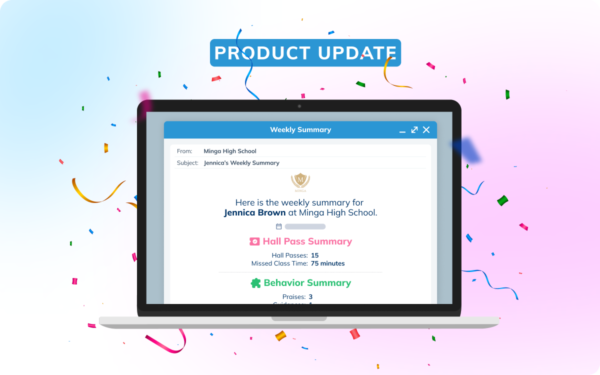
At Monterey High School, staff logged 3,779 recognitions in a single semester: a number that only happens when the logging doesn’t interrupt the teaching. Every one of those recognitions generated a parent notification that went home the same day. Those notifications aren’t a communication feature. They’re the critical moment the behavior loop reaches home.
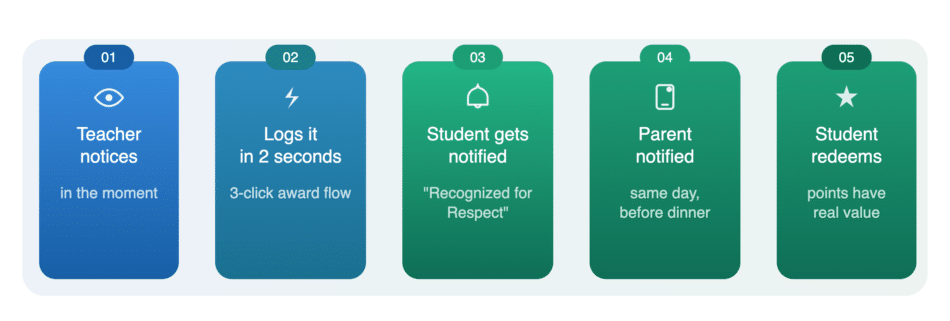
The recognition that closes the loop looks like: teacher notices, logs in two seconds, student gets a notification that names the behavior, parent gets the same notification before dinner, student has something meaningful to do with the points. The loop only works when every step works.
If you’re looking for ideas on what to put in the store, this roundup of reward ideas that actually resonate with students is a good starting point.