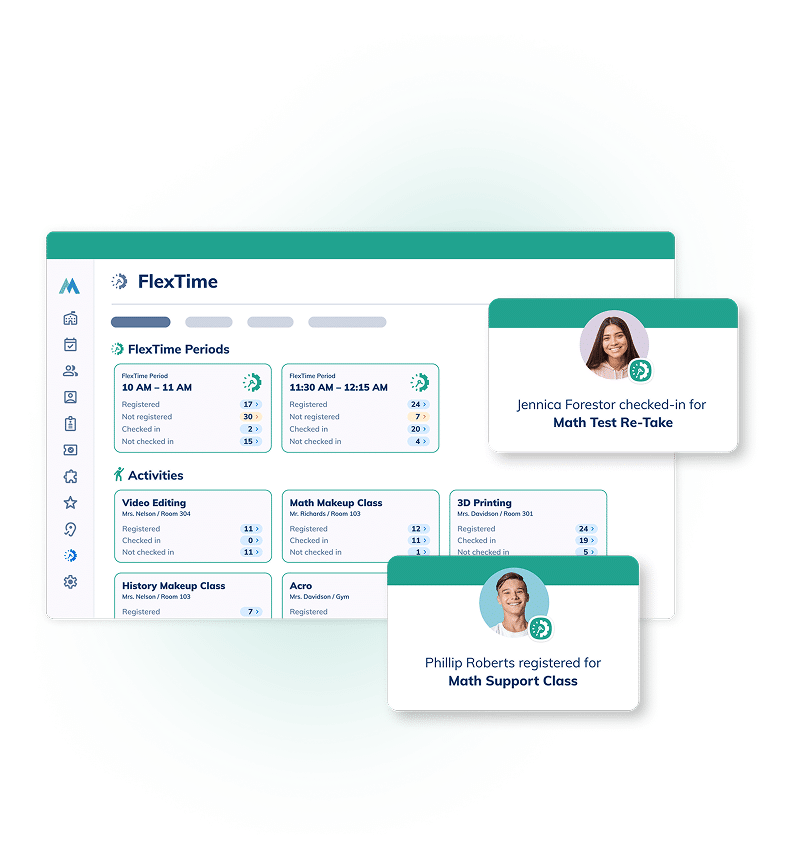
Discover how schools are using flexible learning time to drive engagement, intervention, and equity.
Flex periods have evolved from a scheduling luxury to one of the most strategic tools schools have to improve learning recovery, attendance, and equity.
As education systems adapt to post pandemic realities, flex time is now essential infrastructure for meeting MTSS/RTI goals and student engagement challenges.

Why It Matters
Learning loss, absenteeism, and growing SEL needs have pushed schools to rethink how every minute of the day supports student success. Flex blocks—WIN Time, Advisory, Enrichment—are now engines for personalized support, meaningful choice, and equity.
5 Trends Shaping Flex in 2026–27
1 Support + Choice:
Flex blocks now blend targeted intervention with student-driven options.
2 Whole-Child Focus:
SEL, behavior, and executive-skill supports sit alongside academics.
3 Equity by Design:
Districts track how every minute is spent to ensure fair access.
4 Attendance Levers:
Schools use flex to pull students back through engaging incentives.
5 Smart Scheduling:
Automation replaces static rosters with data-driven adaptability
Real Life Success with Flex
Edge High School recovered an extra 11 hours of instructional time per month, saw a 40% increase in make-up lessons completed, and an 11% decrease in tardies. All through an effective flex period implementation.
ANNE ORTIZ
Finance and Resource Director
Edge High School, AZ
View case study >

Key Takeaways
KEY INSIGHTS
The Flex Period Evolution: From Nice-to-Have to Strategic Necessity
Not a decade ago, flex periods were treated as a scheduling luxury—a space for tutoring, advisory, or occasional enrichment. But the education landscape has shifted dramatically. The disruptions of COVID didn’t just expose cracks in the system—they widened them.
Chronic absenteeism rarely starts with a student skipping an entire day. It begins earlier and more subtly with:
- Learning loss reached historic levels, with national assessments showing steep declines in math and reading, especially for the most vulnerable students.
- Chronic absenteeism doubled, eroding both learning time and community connection.
- Behavior and SEL needs surged, with nearly 9 in 10 schools reporting significant socio-emotional setbacks.
- Equity gaps became impossible to ignore, as post-pandemic data made clear who was getting support—and who was being left behind.
In today’s new reality, flex isn’t extra. It’s one of the most powerful levers schools have to address the intertwined challenges of academic recovery, attendance, engagement, and equity.
Why the Old Schedule Can’t Keep Up
The traditional bell schedule is rigid by design; built for a time when student needs were more uniform and predictable. Today, that needs spectrum is broader:
- Delivers MTSS/RTI interventions with fidelity and documentation. Pairs academic support with student choice to drive attendance.
- Integrates SEL, behavior, and executive function skill-building into the regular school rhythm.
- Ensures every student—not just the most vocal or resourced—has access to both help and opportunity
Before now, implementing this at scale was often out of reach. Manual scheduling, spreadsheets, and hallway management demands made it difficult, sometimes impossible, for schools to deliver the right support to the right student at the right time.
From Convenience to a Strategic Engine
What began as a way to “fit in a little extra” has become a strategic engine, a block of time that:
- Some students need immediate targeted intervention to close gaps before they widen.
- Others are ready for enrichment, acceleration and deeper challenges.
- All benefit from more consistent connection, mentorship and a time to reset.
The stakes are high. Schools that master flex aren’t just keeping up—they’re reshaping the learning experience to be more adaptive, equitable, and student-centered. And now, with the right technology in place, the question for 2025–26 isn’t whether you’ll have a flex period; it’s how you’ll use it to change the trajectory for your students.
FLEX TRENDS TO PAY ATTENTION TO THIS SCHOOL YEAR
1 Balancing Targeted Intervention and Student Choice in a Single Block
When students earn choice, engagement soars and learning follows.
What’s happening:
Flex periods are evolving into dual-purpose blocks—students needing support get targeted intervention, while those on track choose from clubs, study halls, or enrichment. This hybrid model is becoming the norm, motivating performance while preserving equity.
Why it matters:
Students get what they need—without stigma or idle time. It increases engagement, improves attendance, and gives students ownership of their learning
Try this:
- Offer a weekly “Choice Menu” for students meeting benchmarks
- Set clear eligibility (e.g., academic progress, completed work)
- Build hype with weekly “Choice Openings” announcements
2 Tiered Supports are Expanding Beyond Just Academics
Flex isn’t just about catching up on reading; it’s how schools support the whole child.
What’s happening:
SEL groups, behavior coaching, attendance recovery, and executive function workshops are now part of flex alongside academics, reflecting the link between emotional stability and academic success.
Why it matters:
Addressing non-academic needs prevents small issues from becoming bigger barriers. Students leave more ready to learn.
Try this:
- Map your existing non-academic supports and align them to MTSS tiers
- Rotate students so they access both academic and non-academic help
3 Districts are Auditing Time as an Equity Resource
If time isn’t tracked, equity can’t be proven.
What’s happening:
There’s growing attention to how time is distributed: who gets pulled from electives for intervention, who always gets enrichment, and who gets neither. Time is treated as a measurable equity resource, critical for MTSS documentation and fairness.
Why it matters:
Ensures support and opportunity reach all students, not just a select few. Prevents “silent inequities” where students miss both help and engagement.
Try this:
- Run a monthly Flex Equity Audit – check who is always in intervention, who always gets enrichment, and who is missing from both
- Adjust assignments to ensure all students access support and opportunities
4 Using Flex to Tackle Chronic Absenteeism
Give students a reason to be in the building.
What’s happening:
Districts are intentionally designing flex periods to boost attendance, placing the most desirable content (enrichment, clubs, student-selected time) at the beginning of the day or right after lunch to pull students in.
Why it matters:
Attendance is now both a funding issue and a well-being issue. Flex has become a strategic scheduling lever to bring kids back, especially in middle and high school.
Try this:
- Make flex an incentive: Schedule the most engaging activities (clubs, makerspace, game-based learning) at the start of the day or immediately after lunch.
- Pair incentives with recognition — feature a “Flex Spotlight” for students who show consistent attendance.
5 Automation and Adaptability Are Replacing Static Rostering
Build the roster around where students are right now.
What’s happening:
Flex periods are no longer being scheduled once per semester. Schools are moving toward weekly or dynamic updates based on real-time data—assessment, attendance, behavior, SEL. This \ isn’t possible without automation.
Why it matters:
With smarter systems and automation, staff get time back, burnout drops, and students get exactly the support they need, when they need it.
Try this:
- Pilot first: Test dynamic flex scheduling with one grade or group for a few weeks.
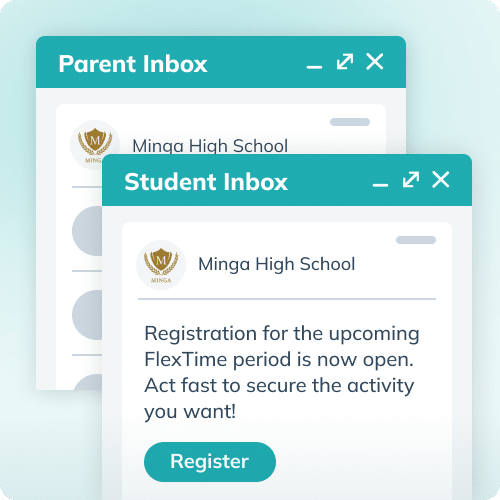
- Automate next: Use tools like Minga to roster, track, and adjust in real time —fast and low-lift.
EDGE HIGH SCHOOL
Using Flex Scheduling to Reconnect Students and Strengthen Accountability
Challenge:
Edge High School in Arizona serves at-risk youth through a self-paced, flexible learning model designed to support credit recovery and dropout prevention. However, tracking attendance, make-up time, and student movement became overwhelming with paper-based systems. Manual scheduling, binders, and handwritten passes created administrative overload and limited visibility into where students were, or whether they were completing required make-up lessons.
Solution:
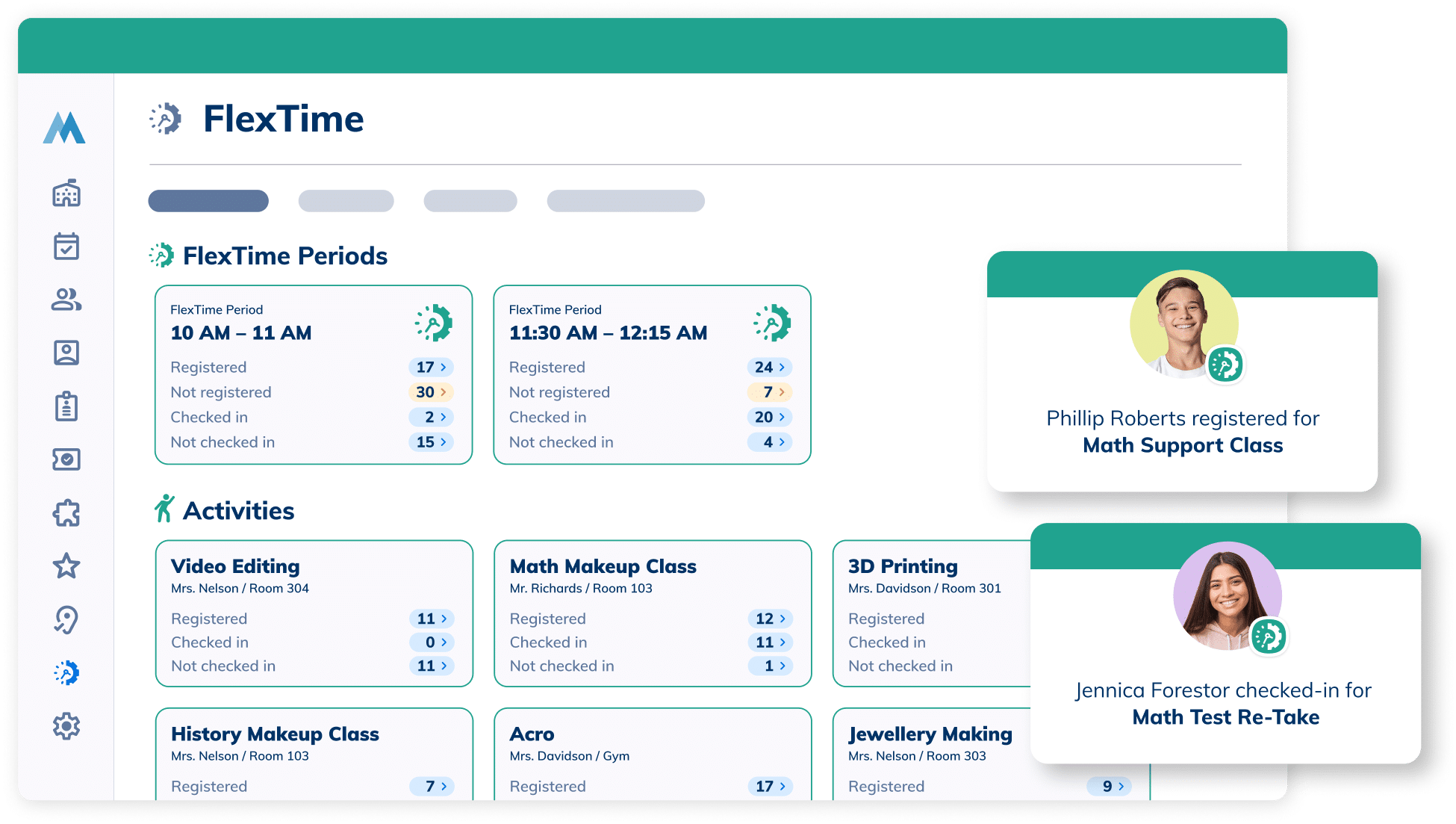
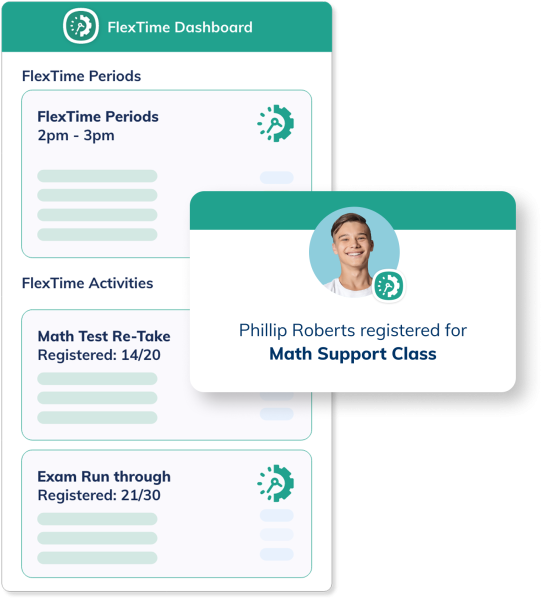
Edge High implemented Minga’s FlexTime to automate scheduling and simplify accountability. The platform replaced paper slips and spreadsheets with a digital check-in system, automated tardy tracking, and dynamic Flex scheduling. Students now scan in with digital IDs, get assigned make-up sessions automatically, and staff can instantly see attendance and hall pass data in real time. The result: less paperwork, more time for student support, and a calmer, more connected campus.
Results:
In just eight weeks, Edge High saw a 40% increase in completed make-up classes, an 11% decrease in tardiness, and over 2,400 make-up sessions logged in a semester. With clearer visibility, stronger accountability, and streamlined systems, Edge High turned FlexTime into a cornerstone for both engagement and equity
Now everything is automated. Students scan in, get their tardy recorded, and are instantly scheduled for make-up time. It’s smoother, faster, and nothing gets lost in paper anymore.”
ANNE ORTIZ
Finance and Resource Director
Edge High School, AZ
View case study >
FlexTime Trends in Action at Edge High
Key Recommendations
Meet Minga FlexTime – Delivering Student Success, Not Just Scheduling It.