
STUDENT BEHAVIOR & DISCIPLINE
Texas: Trends & Insights on Student Behavior 2026-27
The most pressing concerns about student behavior, gathered from school leaders at the TASSP Summer Workshop 2026.
Want to share these insights?
REAL-WORLD PERSPECTIVES ON SCHOOL CULTURE FROM TEXAS
Texas public schools are heading into 2026-27 under more pressure than any year in recent memory. Enrollment dropped by more than 76,000 students in 2025-26 – the largest non- pandemic decline in recorded Texas history – driven by families moving to private schools, homeschooling, or leaving the state altogether. New compliance requirements under SB 991 mean that chronic absenteeism now triggers mandatory intervention, and districts are expected to have the attendance-tracking systems to back it up.
The schools that head into fall with the right culture and systems already in place are the ones best positioned to hold onto their students – and their funding.
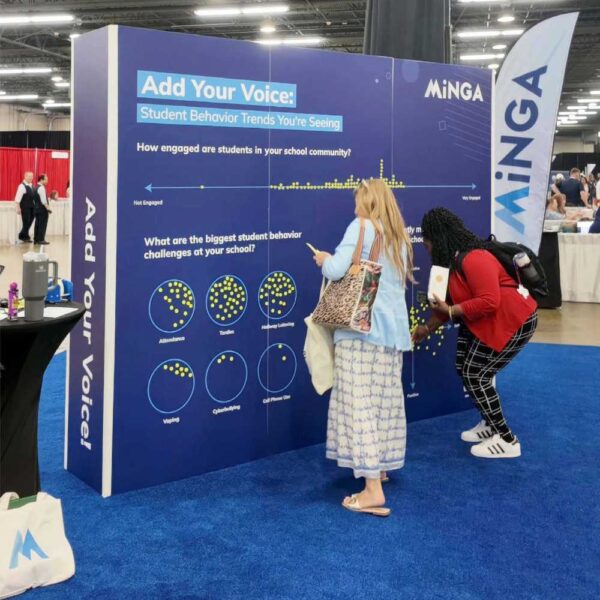
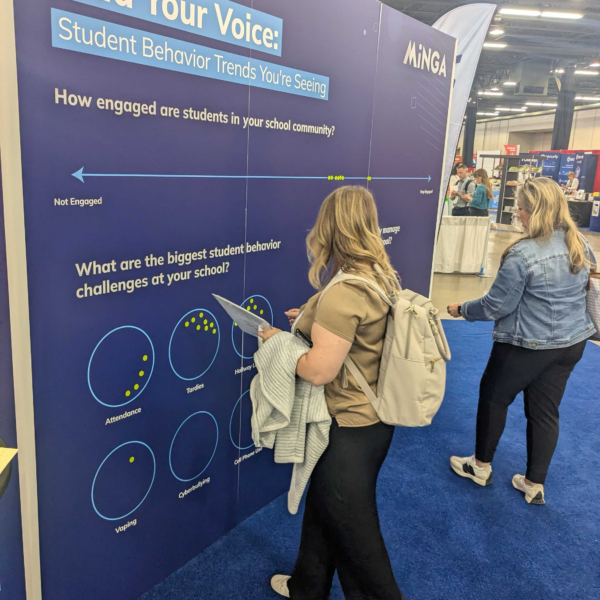
Against that backdrop, Minga brought its Engagement Wall to the TASSP Summer Workshop 2026. We asked Texas secondary school principals three direct questions about the state of student behavior and engagement in their schools.
We asked attendees to weigh in on three critical areas:
1 How engaged are students in your school community?
2 What are your biggest student behavior challenges?
3 How do you currently manage behaviors at your school?
THE 2026 STUDENT BEHAVIOR PULSE CHECK
1 How engaged are students in your school community?
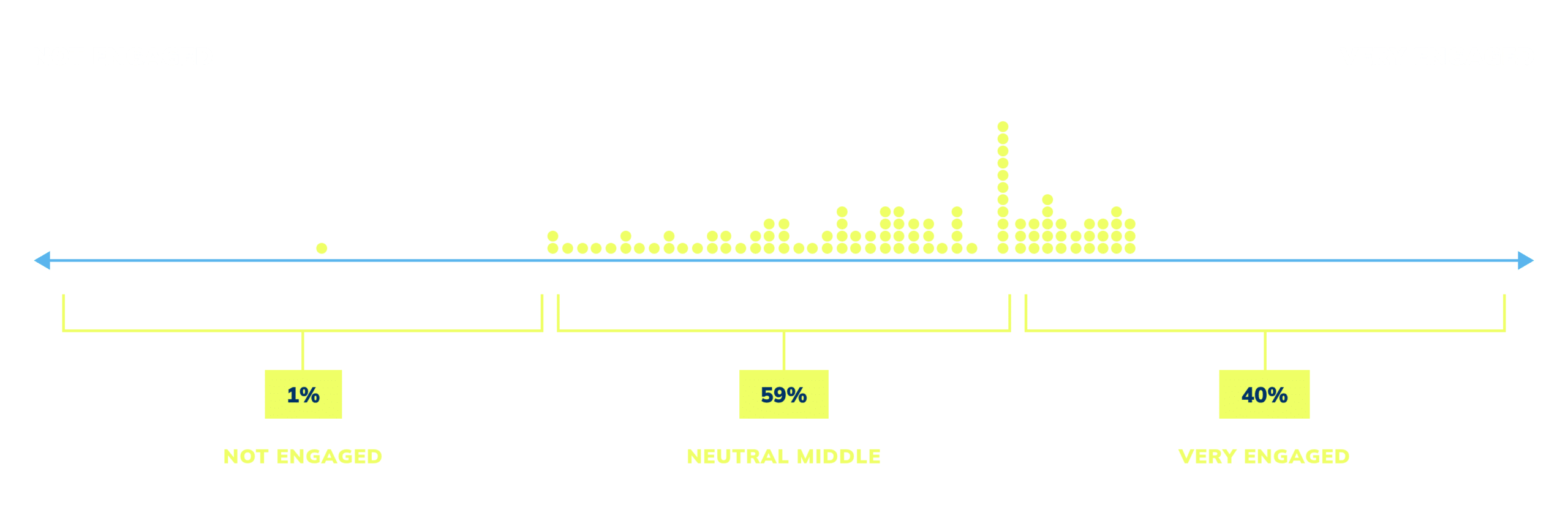
Participants placed their dots along a continuum from “Not Engaged” to “Very Engaged.” The results at TASSP tell a story of cautious optimism: nearly every respondent placed their dot in the middle or right of the spectrum. But the majority stopped short of “Very Engaged.”
Only 1 respondent placed their dot in the low-engagement zone. 59% landed in the “Neutral Middle”. 40% reported high engagement.
We’ve seen this same split at every event in this series. Most principals aren’t worried about students who are completely checked out. The more common concern is students who are physically present but haven’t found their footing yet – students who show up, but don’t feel like they fully belong. In Texas, where more than 76,000 students unenrolled from public schools this year, keeping the students you have starts with making sure they feel connected.
THE TAKEAWAY
The concern isn’t about students who have fully checked out. It’s about schools that are stuck in the middle – where students are present, but the culture hasn’t fully taken hold yet. That’s where most Texas principals find themselves right now.
1%
Not Engaged: These schools have students who are almost entirely disconnected. The relationship between the student and the school has broken down.
59%
Neutral Middle: These schools have students in the building, but haven’t yet built the culture that makes them want to be there. Engagement is surface-level. Belonging hasn’t clicked.
40%
Very Engaged: These schools have cracked it. Students aren’t just showing up – they’re invested. Culture is working.
WHAT THIS MEANS FOR YOUR CAMPUS
If your school is in the neutral middle, that’s actually the most actionable place to be. Your students are still here. The relationship isn’t lost. The question is whether you have the right systems to move them from present to invested – consistently, across every classroom, every staff member, every day. Schools that close that gap don’t just improve culture. They improve retention.
BEHAVIOR CHALLENGES
2 What are the biggest student behavior challenges at your school?
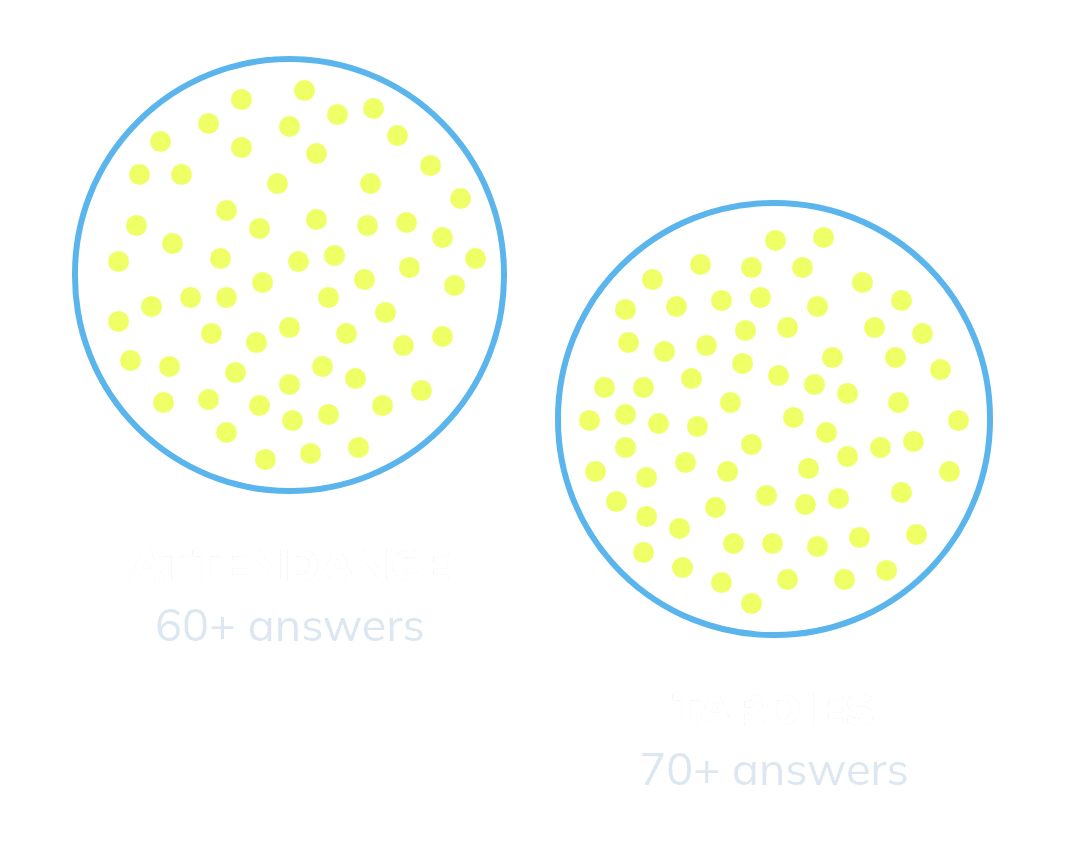
ATTENDANCE | TARDIES
Attendance and tardies have led the conversation at every event in this series – TASSP is no different. Together, they account for 132 responses, more than double any other category. Under SB 991, chronic absenteeism now triggers mandatory intervention. Every missed day carries more weight than it did a year ago.
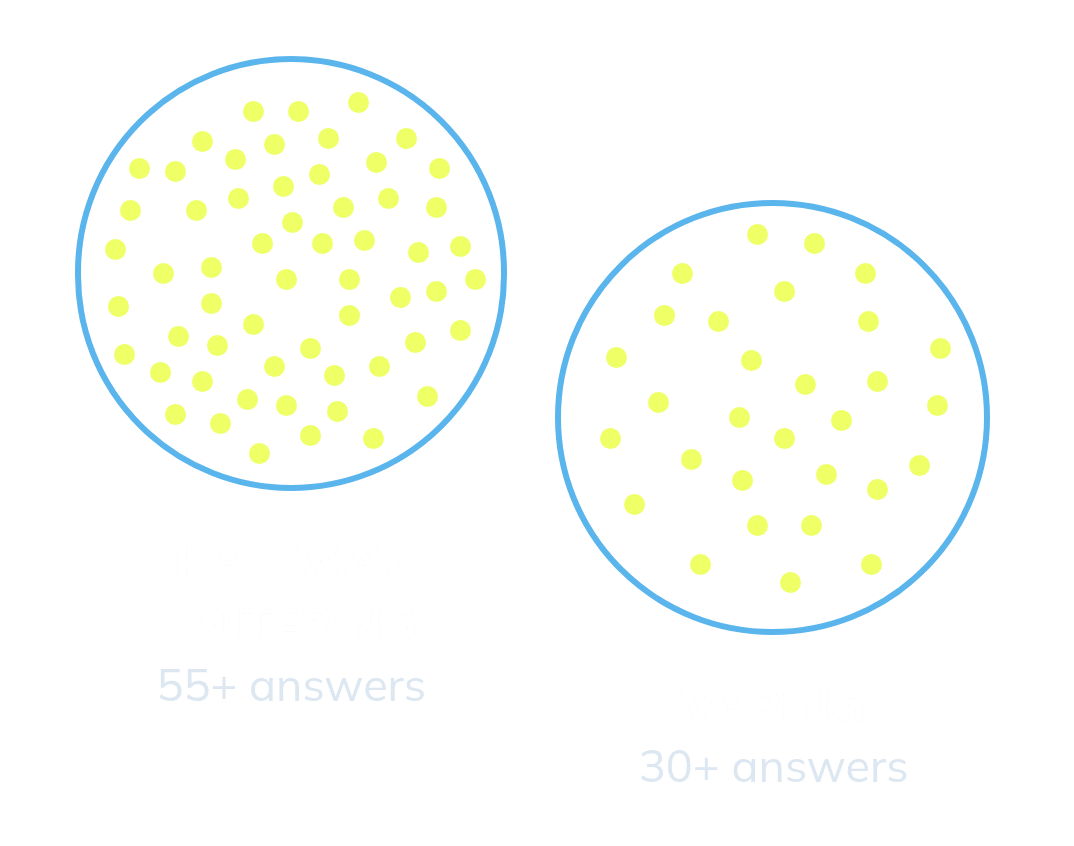
HALLWAY LOITERING | VAPING
Hallway loitering came in at 58 responses – nearly matching tardies, and higher than any other event in this series. For Texas principals, a student in the hallway isn’t just a supervision problem. It’s a visibility problem. A student in the hall is a student not in class.
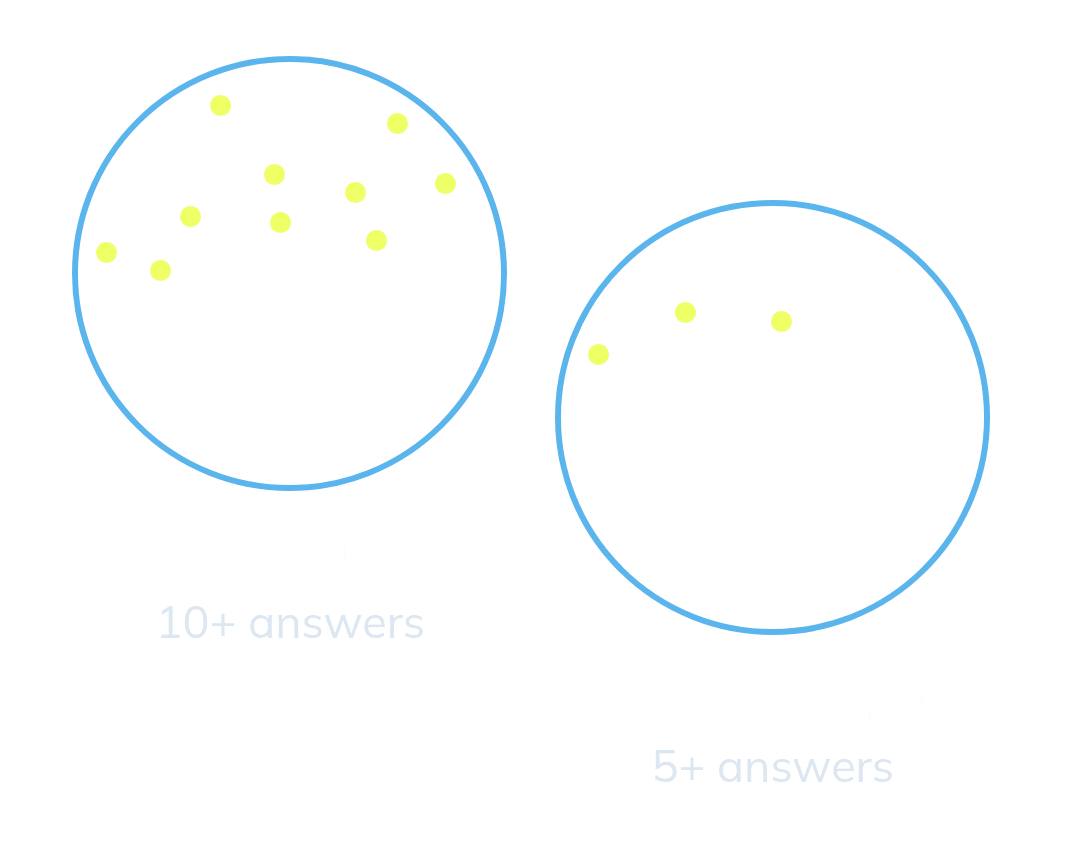
CELL PHONE USE | CYBERBULLYING
Cell phone use ranked low at just 10 responses, versus 140+ at FETC and CADA. That’s a good sign. Texas took a statewide approach to this issue, and if principals aren’t flagging phones as a top concern, it suggests the policy is doing its job.
THE TAKEAWAY
Texas principals are not managing crises; they’re managing quiet departures. Students leaving class late, drifting into hallways, missing days in ways that compound slowly and invisibly until the data catches up.
With chronic absenteeism now a compliance trigger, the principals in this room understand that attendance is not just a metric. It is the foundation on which everything else is built. And the warning signs are hiding in plain sight. Hallway loitering and tardies aren’t just daily frustrations. They are leading indicators of absenteeism, the earliest signals that a student is starting to drift.
The schools that catch those signals early are the ones that keep students. The ones that don’t are left intervening after the fact – when it’s harder, slower, and more expensive to course correct.
WHAT THIS MEANS FOR YOUR CAMPUS
The state’s basic allotment is $6,215 per student, tied directly to whether students are in their seats. A campus of 1,000 students running at 90% attendance instead of 95% is more than just a 5% difference. It’s a funding gap of roughly $310,000 per year.
Under SB 991, the compliance stakes are layered on top. Schools need to know which students are trending toward chronic absenteeism before they get there, not after the semester ends.
MANAGING STUDENT BEHAVIOR
3 How do you currently manage behaviors at your school?
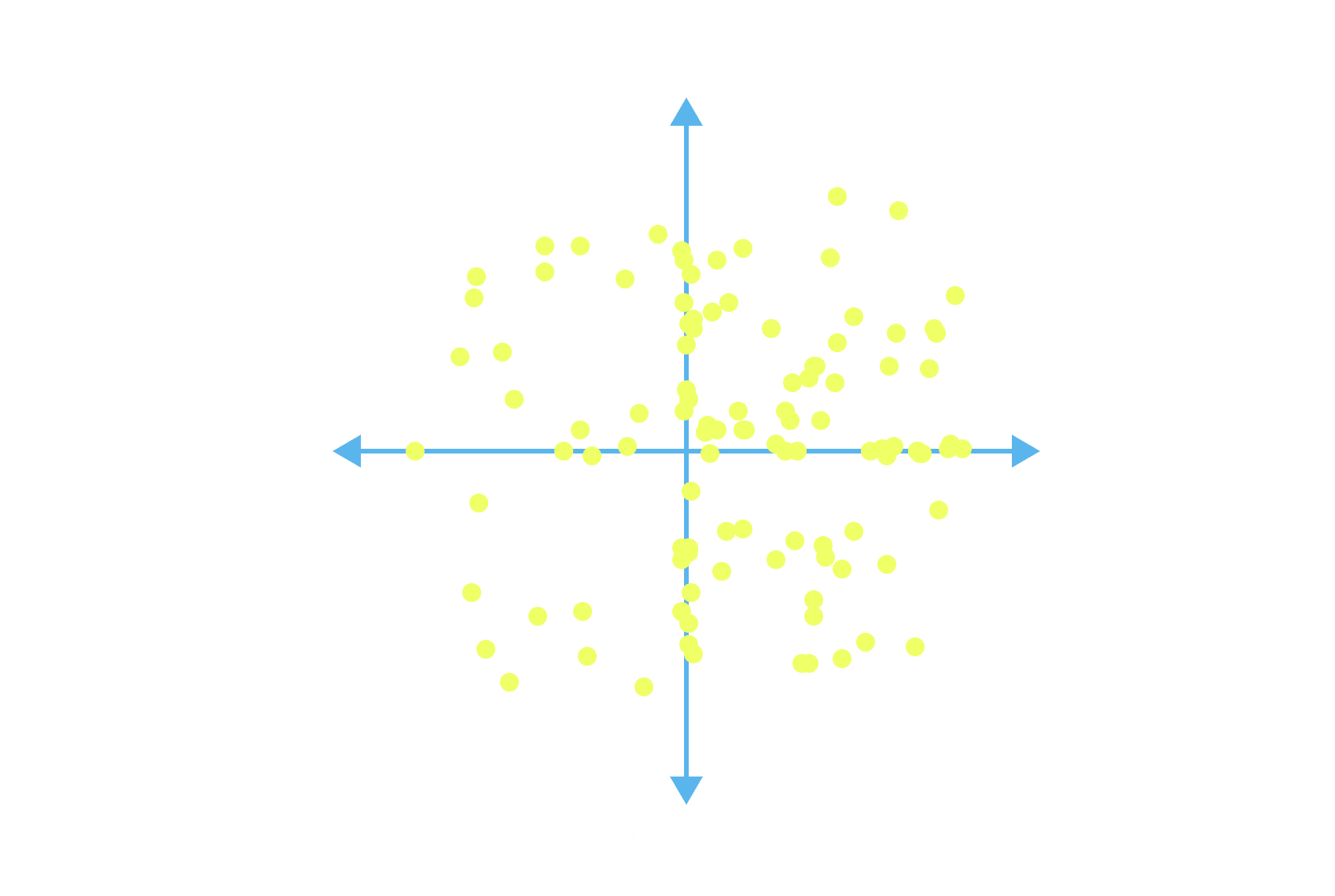
Participants at TASSP plotted their answers on a 2-axis matrix:
X-axis: Spreadsheets to Software
Y-axis: Punitive to Preventive
- The dominant story here is prevention. When you combine the top-right quadrant, the preventive axis, and the top-left quadrant, nearly half of all respondents (53 dots, 49%) are operating with a preventive mindset.
- That is a clear signal: Texas secondary principals are not trying to catch students doing something wrong. They are trying to get ahead of it.
- But intent and infrastructure are not the same thing. A meaningful cluster sits in the bottom right: 18 respondents using software but still operating punitively. And the top left shows 12 principals with the right mindset, but still anchored to spreadsheets.
- The vision is clear. The execution is fragmented.
THE TAKEAWAY
Nearly half of Texas principals are already thinking preventively. The intent is there.
But intent running on spreadsheets has a ceiling. Manual processes slow everything down, create gaps, and put the burden back on already stretched staff.
The schools closing the gap between vision and execution aren’t doing it through harder work. They’re doing it through better systems.
PREVENTION ONLY WORKS IF IT’S CONSISTENT
A principal can set the tone, but if the systems aren’t in place to back it up across every classroom, every period, every day, the vision stays at the leadership level and never reaches the students who need it most. The schools making the biggest gains on behavior and attendance aren’t necessarily the ones with the best intentions. They’re the ones whose intentions are backed by infrastructure.
WHAT TEXAS PRINCIPALS ARE TELLING US IN 2026
Three themes define the moment:
- THE ATTENDANCE MANDATE
SB 991 has made attendance a legal obligation, not just a cultural one. Principals need to see attendance data in real time – not at the end of the semester, and catch early warning signs before missing class becomes a habit. - WHEN STUDENTS DRIFT
Loitering and tardies aren’t just daily frustrations. They are early warning signs of chronic absenteeism, playing out one period at a time. - THE VISION/EXECUTION GAP
The intent is there. The obstacle is manual processes that prevent a prevention-first vision from reaching every student, every day.
Your Students Are Still Reachable. Let’s Keep Them That Way.
The question is whether your systems are built to reach them. Minga gives Texas principals the real-time visibility and automated workflows to stop chasing behavior and start building the culture their students need.
