Many student challenges start with campus systems that don’t work as intended. This guide helps Texas school leaders rebuild consistency, restore instructional time, and support staff with tools designed for real-world use.
Executive Summary
Across Texas, school leaders are grappling with mounting pressures: chronic absenteeism, classroom disruptions, staff burnout, and increasingly complex accountability demands. The source of these issues isn’t always a breakdown in student discipline, it’s often a breakdown in visibility.
This paper outlines the fundamental roots of time loss, culture erosion, and disengagement – and introduces a scalable framework for building behavior into the infrastructure of the school day.

What You’ll Learn in This Paper
1.
Why time loss and behavior issues are symptoms of broken systems, not student failure
2.
How to shift from reactive discipline to proactive behavior infrastructure
3.
How Texas schools are addressing attendance, ADA impact, and hallway management
4.
A practical framework for reinforcing expectations: On Time, On Task, On Purpose
5.
Real examples from schools that have improved culture without adding complexity
THE PROBLEM
Lost Time, Lost Culture
Every day across Texas schools, a silent disruption is playing out. Students arrive five minutes late. Hallways stretch into unmonitored zones. Hall passes are handed out loosely. And while no single incident feels consequential, the cumulative effect is staggering: lost instructional time, deteriorating school culture, and rising chronic absenteeism.
1. The Hidden Path to Dropout
Chronic absenteeism rarely starts with a student skipping an entire day. It begins earlier and more subtly with:
- Tardies ➔ Disengagement
Frequent lateness quietly builds into missed days. - Unchecked Passes ➔ Lost Time
Frequent hall passes add up to real instructional loss. - Loose Norms ➔ Mixed Signals
Inconsistent expectations make showing up feel optional
When these behaviors go untracked and unsupported, students learn that expectations are optional—and schools lose the visibility they need to intervene.
One long-term study of nearly 13,000 students found that 60% of students with persistent absenteeism failed to complete high school without intervention.
As outlined in the Texas Education Agency report titled ‘Chronic Absenteeism in Academic Accountability¹, the impact of absenteeism is staggering:
- Grades 8–12: Chronically absent students are 7× more likely to drop out.
- Grade 6: A key early warning sign of future dropout risk.
- Grade 9: Predicts 77% of eventual dropouts
2. The Cost of Absence—Instructionally, Financially, and Culturally
Students who miss more than 10% of the school year (about 18 days) are more likely to experience:
- Lower academic achievement
- Higher rates of behavioral issues
- Reduced chances of postsecondary completion
Each absence—whether a full day or the first 10 minutes of class—adds up. Worse still, these effects hit lowperforming and economically disadvantaged students the hardest.”²
¹ Chronic Absenteeism in Academic Accountability, Texas Education Agency
² National Bureau of Economic Research Working Paper No. 17253
3. The Financial Toll on Schools
Tardiness and absenteeism don’t just disrupt classrooms—they directly affect a school’s bottom line. In Texas, where Average Daily Attendance (ADA) determines funding, even small dips in attendance can cost schools thousands of dollars.
A few percentage points can mean the difference between maintaining class sizes—or losing the ability to hire additional staff. When students miss class, schools miss out on critical resources needed for instruction, support, and intervention.
4. The Ripple Effect on School Culture
Beyond dollars and data, the real cost of absenteeism is felt daily in the classroom:
- Reduced classroom cohesion: Teachers must reteach or slow instruction.
- Weakened routines: Frequent tardies erode expectations and norms.
- Demoralized staff: Lost time translates to lost momentum—and often, lost morale.
In short, when time is lost, so is culture. And without the tools to proactively manage hallway behaviors, schools are left reactive, under-resourced, and increasingly fragmented.
We lose about $7 million for every one percentage point change in the attendance rate, and that’s money we can use directly for our kids and for those services that they so sorely need.”
— Dr. Douglas Killian, Superintendent, Cy-Fair ISD
THE ROOT CAUSE
Systems, Not Students
It’s easy to label student behavior as the problem. But in reality, Texas educators aren’t facing a student accountability crisis; they’re facing a visibility crisis.
Across the state, school leaders are navigating:
- New TEA A–F accountability updates
- HB 114 mandates
- ADA funding pressure
- Teacher attrition
- Equity in discipline
Yet in many districts, systems for tracking hall passes, tardies, or out-of-class movement are still manual, inconsistent, or nonexistent.
1. Teachers Are Stretched Thin, and It Shows
Texas teachers are some of the most committed in the country, but they’re being asked to do more with less. A recent McKinsey study found that Texas leads the nation in teacher attrition, with many citing student behavior and administrative burden as top reasons for leaving.
Expecting educators to track hallway movement, monitor bathroom trips, log tardies by hand, and teach effectively is a setup for burnout—not accountability.
Minga has really empowered teachers to feel a sense of relief. They aren’t having to go and drive kids out of the hallway all the time.”
LARRY PARKER
Behavior Specialist,
Allen High School, TX
View case study >

2. Inconsistent Data = Inconsistent Accountability
Without modern tools:
- Tardy policies are enforced differently from room to room
- Office staff can’t see patterns until it’s too late
- Administrators are left without the early-warning indicators needed to intervene
And in a state where ADA directly affects funding, these blind spots don’t just impact culture—they impact budgets.
3. Unmanaged Hallways = Missed Opportunities
From Lubbock to Laredo, hallways are where students test limits— and where campus culture is either reinforced or eroded. Yet in many schools:
- Bathroom breaks are unmonitored
- Hall passes are easily abused
- Tardies are manually tracked, with inconsistent follow-through
This leaves administrators flying blind in the one space that connects every classroom.
What Texas Schools Need: Infrastructure, Not Just Rules
TEA guidance emphasizes early intervention, Tier 1 supports, and data-informed leadership. But without the systems to support those goals, even the best policies fall short.
Texas schools need:
- Real-time behavior and attendance data
- Consistent enforcement that doesn’t rely on one overworked AP
- Visibility across the school day, without compromising student autonomy
When schools invest in infrastructure that supports structure, behavior becomes more manageable, and culture begins to thrive.
THE SOLUTION
Build Behavior into the Infrastructure
Once we acknowledge that behavior challenges stem from visibility gaps—not just student choices—we can reframe how schools respond. The solution isn’t more rules, more security, or more referrals. It’s building a simple, consistent infrastructure that reinforces expectations all day, every day—without burning out staff or over-disciplining kids.
Here’s what it looks like in practice:
Tardy Tracking That Teaches Habits
Most students don’t intend to be late. But without consistent expectations—and without anyone noticing—it becomes a habit. And habits, over time, shape culture.
Why real-time data matters:
When schools track tardies digitally, patterns become visible—by student, by period, by teacher, by day. That allows staff to spot and intervene before a student becomes chronically disengaged.
Why students respond:
When students know every tardy is recorded (not forgotten or ignored), they self-correct. A clear, consistent system builds internal accounta bility, especially when it’s paired with feedback and follow-up.
Why parents care:
Tardy data that flows into real-time dashboards or automated notifications helps families stay involved without waiting for a report card or discipline letter.
One North Texas high school saw a dramatic drop in 1st-period tardies after implementing a digital management system. Students began arriving on time—not because of threats, but because the system created clear, visible expectations.
Passes and Points That Reinforce Accountability
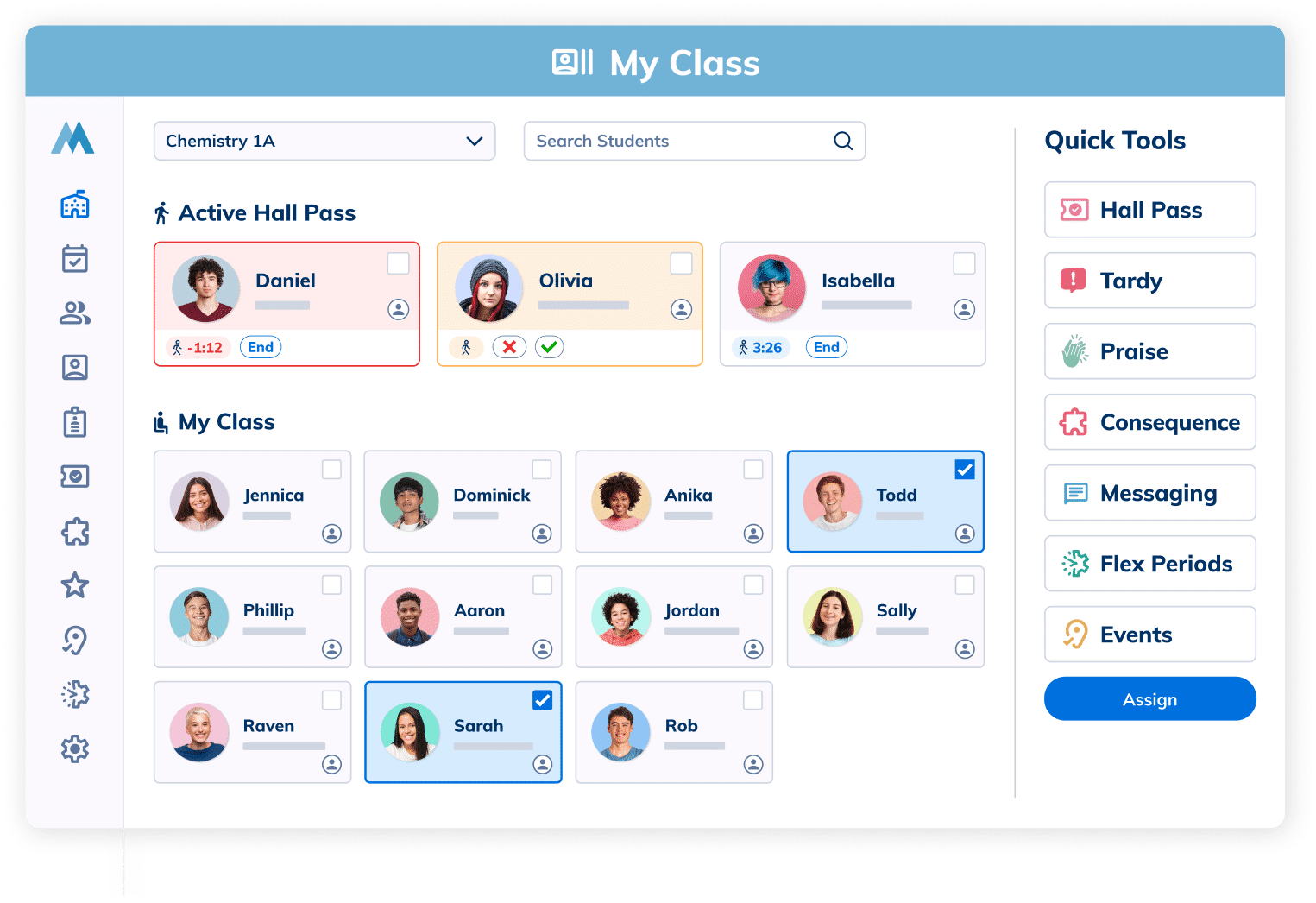
Hallway movement, bathroom breaks, frontoffice trips—these are the cracks where instructional time gets lost and expectations fall apart. Yet most schools still rely on paper hall passes or verbal permission. The result? No audit trail, no consistency, no data.
What digital hall passes solve:
- Know when students leave and return
- Set limits (e.g., 3 passes/day)
- Identify misuse patterns or frequent flyers
- Reduce classroom interruptions
Why this isn’t surveillance:
Effective systems don’t require GPS tracking or intrusive monitoring. They use digital check-ins, timestamps, and teacher-controlled settings to build structure—while respecting student autonomy.
Points that build behavior, not bribes:
When used thoughtfully, a digital point system (recognizing effort, punctuality, helpfulness, etc.) can reinforce campus norms and allow staff to redirect behavior without escalating discipline.
Tools That Empower Teachers, Not Just Track Students
The best systems aren’t built for administrators— they’re built for educators. Teachers are the first line of culture—and they need tools that are simple, consistent, and empowering.
What staff need:
- Tardy and pass tools that take <30 seconds to use
- Automated follow-ups (e.g., detentions, parent alerts)
- Insight into their own class patterns without running reports
What students need:
- Predictable expectations across every class
- Clear incentives and consequences
- A sense that the system is about growth, not gotchas
How it aligns:
- Supports Tier 1 interventions under MTSS
- Reinforces positive behaviors in PBIS frameworks
- Builds social-emotional skills like time management and responsibility—key priorities under SEL initiatives in Texas districts
THE OUTCOME
A School That Runs on Culture, Not Chaos
When schools align their tools to their values, everything changes. Students know the expectations. Teachers feel supported. Admins gain visibility. And campus culture shifts—from reactive to proactive, from inconsistent to intentional.
Teachers no longer need to be the ‘bad guy,’ helping to hold students accountable while improving student-teacher relationships.”
LARRY PARKER
Behavior Specialist,
Allen High School, TX
View case study >
TEXAS IN ACTION
Real World Insights
Across Texas, schools are quietly transforming how they manage behavior—and the early results are compelling. These stories don’t live in dashboards or policy memos. They live in passing periods, staff lounges, and classrooms that just feel calmer.
Take Allen High School, one of the largest high schools in the state. Before adopting a digital system, administrators described their behavior process as reactive and inconsistent. Educators reported frustration with a lack of follow-through. But within weeks of implementing a real-time tardy and hall pass system:
- Over 90% of staff were using the system consistently
- Hallway movement dropped significantly
- Conversations shifted from punishment to habit-building and self-accountability
Clear expectations and a reliable system have reduced student pushback and empowered staff to enforce rules without confrontation.”
LARRY PARKER
Behavior Specialist
Allen High School, TX
In another district, a high-poverty middle school used behavior points to reinforce positive actions and reduce minor disruptions. Teachers who previously felt overwhelmed began reporting fewer referrals, more engagement, and a renewed sense of control.
We stopped trying to ‘catch’ students doing the wrong thing and started rewarding the right things. Kids noticed—and they responded.”
Behavior Interventionist
Central Texas ISD
These aren’t isolated wins. They’re signals of a broader shift underway: one where behavior systems aren’t just about discipline, but about culture, visibility, and trust.
CONCLUSION
Structure Drives Culture
Every day, Texas schools lose valuable instructional time to hallway drift, inconsistent expectations and disengaged students. It’s not because educators aren’t trying, but because the systems they rely on weren’t built to keep up.
So where to go from here? You’ve seen how:
- Lost time is a culture issue, not just a scheduling one
- Behavior gaps are visibility gaps, and systems (not stricter rules) close them
- Texas schools are already making the shift, with meaningful results
- A simple, easy-to-implement framework – On Time, On Task, On Purpose – can help any school embed behavior into the day-to-day.
Most critically, you’ve seen that solving these issues doesn’t require more bandwidth – it just requires better structure. Because when expectations are visible, systems are consistent and staff are empowered, behavior improves, culture stabilizes, and schools thrive.
And when culture works, everything else gets easier.
Get in touch with Minga today
Minga works with hundreds of schools in Texas, helping to improve instructional time and address disruptive behaviors. Want to learn how your school could benefit? Let’s talk about what structure could look like on your campus.